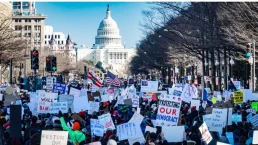
Protests change the protesters, their communities and the nation. From emancipation to women’s suffrage, civil rights and BLM, mass movements have shaped the arc of US history.
By Robin Buller, The Guardian
Trump’s first and second terms have been marked by huge protests, from the 2017 Women’s March to the protests for racial justice after George Floyd’s murder, to this year’s No Kings demonstrations. But how effective is this type of collective action?
According to historians and political scientists who study protest: very. From emancipation to women’s suffrage, from civil rights to Black Lives Matter, mass movement has shaped the arc of American history. Protest has led to the passage of legislation that gave women the right to vote, banned segregation and legalized same-sex marriage. It has also sparked cultural shifts in how Americans perceive things like bodily autonomy, economic inequality and racial bias.
But as with any tool, there are ways to sharpen and blunt a protest’s impact. Here’s what decades of research tells us about what protest can and can’t do.
Protests can affect elections
When Carmen Perez-Jordan was first asked to organize a national protest for women’s rights, following Donald Trump’s first presidential election win, she did not anticipate that it would become the largest single-day protest in American history. On 21 January 2017, more than 500,000 protesters took to the streets of Washington DC, and as many as 4 million participated in affiliated demonstrations nationwide.
Looking back, Perez-Jordan says the Women’s March engaged millions of people in activism for the first time, inspired other movements like #MeToo and pushed people to see women’s issues beyond reproductive rights. “It was unquestionably impactful,” Perez-Jordan said. “The Women’s March proved that millions will rise up when democracy and human rights are at stake.”
Research confirms that the Women’s March incited tangible change. In particular, it directly prompted an unprecedented surge in female candidates for elected office, which scholars attribute to feeling empowered to draw attention to issues that have historically been dismissed. During the 2018 midterms, more than 500 women ran in congressional races, nearly doubling numbers from 2016.
The protest also changed electoral results. According to one study, regions in which protests had higher turnouts saw positive shifts in votes for Democratic candidates at the county level. Another showed that voters were more likely to support women and candidates of color due to the empowering effect of the protest.
And it isn’t only on the left that this trend can be seen. By the same token, localities that saw greater participation during the 2009 Tea Party protests also witnessed more Republican support during the 2010 midterms, one study finds. This shows the outsize impact a single protester can have, the study’s authors say. That’s because having one more attender at a demonstration rallies more support for a political cause than acquiring one more vote during an election does.
According to the often-cited 3.5% rule, if 3.5% of a population protests against a regime, the regime will fail. Developed by political scientists Erica Chenoweth and Maria Stephan, who researched civil resistance campaigns from 1900 to 2006, the rule has seen renewed interest in leftist circles recently, especially with No Kings protests attracting historic numbers.
Recent Posts
Hegseth Prays for “Overwhelming Violence” in Iran in the “Name of Jesus Christ”
Take Action Now The secretary of defense has previously said that the US is fighting Muslim “religious fanatics” in the Iran war.By Sharon Zhang…
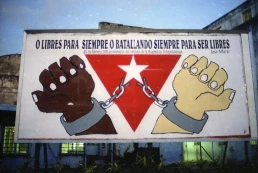
What I Saw in Cuba Was Resilience
Take Action Now I was there as part of an international solidarity convoy; over 500 representatives from more than 30 countries, united by a simple…

It’s Time For Democrats To Face Political Reality on Israel
Take Action Now At its April meeting, the Democratic National Committee must have an open debate on its support of IsraelBy Norman Solomon, Salon…
Critics Slam Meeks, Jeffries Pushing Off War Powers Bill Just as It Gets Enough Votes to Pass
Take Action Now “Each day we delay increases the risk of deeper US involvement and more lives lost,” said one progressive policy adviser. “Failing to…