The U.S., while threatening an invasion and assassination of its leaders and/or bombing of Cuba is already conducting an act of war by this blockade. This is both a continuation of the 66-year-old U.S embargo of Cuba and a further tightening and escalation.
By Peter Bohmer, Z Network
[This is a transcript of Peter Bohmer’s Economics for Everyone panel discussion, “Stop U.S. Aggression Against Iran and Cuba”, May 7, 2026, in Olympia, Washington, USA.]
Personal note: I have studied the Cuban revolution and taught about and been in solidarity with Cuba since the late 1960’s. I have visited five times including living there with my family for four months and teaching Cuban faculty at the University of Havana in 2001. I took a class from The Evergreen State College to Cuba for eight weeks in 2004, traveling through the entire island, and vising more recently. I keep in touch with a few friends there. Peter
The Trump administration is serious about overthrowing the Cuban government and its political economic structure. What can be done to stop it?
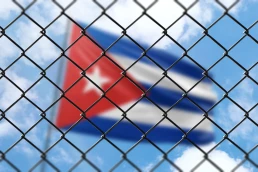
On Mayday, 2026, Trump signed an executive order authorizing additional sanctions on financial institutions and other corporations from around the world trading or investing in Cuba. Trump said, “We will be taking it (Cuba) over almost immediately.” In response, the Cuba President said, “No aggressor, no matter how powerful will find surrender in Cuba.” If Trump were to attack the country, Miguel Diaz-Canel said, “he will find a people determined to defend sovereignty and independence in every inch of our country”.
This follows the Trump administration’s April 14th directive to the Pentagon to “ramp up preparations for possible military action against Cuba.” Trump told reporters the day before that “we may stop by Cuba after we’ve finished with this” (this referring to war against Iran). This followed a January 29th Executive Order calling Cuba “an unusual and extraordinary threat” to US national security”. As part of this, Trump announced a blockade of oil to Cuba and stiff tariffs for any country delivering oil to Cuba with US warships around it. The two main suppliers had been Mexico and Venezuela. They and other nations have stopped shipping oil to Cuba except one big shipment by Russia in late March of this year.
The U.S., while threatening an invasion and assassination of its leaders and/or bombing of Cuba is already conducting an act of war by this blockade. This is both a continuation of the 66-year-old U.S embargo of Cuba and a further tightening and escalation. There is an increased U.S. military presence in the Caribbean, and the U.S. continues to have a naval base at Guantanamo on Cuban soil.
The lack of Cuban access to oil is causing increased blackouts and shortages of food and serious declines in the health care system. The Cuba health care system until recently provided universal and quality health care to the entire population. The objective of the Trump administration is to cause so much hardship and suffering of the Cuban people that they revolt against their government and cause its collapse. This is Trumpism’s preferred strategy. It is inhumane, illegal and immoral. It probably won’t succeed as the Cuban state retains legitimacy especially against the U.S. and there is limited opposition within the Cuban military and the Communist Party against the leadership. Still, an actual military attack by the U.S. is a possibly. Let us not let it happen!
The Cuban Revolution led by Fidel Castro overthrew the dictatorship of Fulgencio Batista on January 1, 1959. President Eisenhower in spring, 1960 signed an order calling for the overthrow of the Cuban government which has been the policy of the U.S. for most of the last 66 years.
Why?
From the 1960’s through the 1980’s, the threat of Cuba to the U.S. ruling class was the threat of a good example. The threat of a good example means that Cuba meeting the needs of its people would inspire anti-capitalist revolutions in the global south, what used to be called the Third World. These societal transformations would reduce or end the possibility of U.S. corporations exploiting the labor and profiting from the minerals and food production of these countries. Supporting corporate capital is a major determinant of U.S. foreign and military policy. In the early 1960’s Cuba did a major land reform and nationalized U.S. owned property such as the sugar mills, mines and hotels. Fidel Castro and the Cuban Revolution were popular throughout the Americas for standing up to the United States, for their universal health and educational system, their internationalism and for their support of revolutionary movements.
The Soviet Union had provided oil at low prices and bought Cuban sugar at above the world market price. This contributed to a slow improvement in access to consumer goods with a major decline in poverty from the 1960’s to the late 1980’s. Life expectancy and infant mortality reached global north levels, basic needs were met and access to education increased substantially, especially for women and in rural areas. Since the collapse of the Soviet Union in 1990-1991, Cuba has had serious economic problems. A major cause has been their inability to export sufficiently to cover their import needs, i.e., a continuing deficit in the balance of payments. Beginning in the 1990’s, tourism became a major earner of foreign exchange, but tourism declined substantially during the Covid epidemic and has not recovered. Cuba overinvested in tourism infrastructure. Venezuela, after the victory of Hugo Chavez as President of Venezuela in 1998 exchanged their oil for Cuban doctors and medicine and advisers in agriculture and security. This partially replaced Soviet support.
The U.S. had claimed falsely that Cuba was a Soviet outpost 90 miles from Miami and therefore a threat to the U.S. That this was not the reason for U.S. aggression was made clear by the U.S. intensifying its embargo/blockade of Cuba after the Soviet Union no longer existed with the Helms-Burton Act. This act penalized foreign countries trading with Cuba further restricting Cuban access to foreign markets. There was a loosening of the embargo, including restoring diplomatic relations and permitting some tourism, trade and remittances under President Obama. Trump, in his first term, reversed this. He further attempted to weaken Cuba’s economy by declaring it a country supporting terrorism which further restricted Cuba’s access to credit and global finance. There has been a large out migration for economic reasons from Cuba. in the last six years, the population has declined by 1.5 million to 10.9 million people. Infant mortality more than doubled between 2018 and 2025.
The U.S. embargo/sanctions have been the major cause of Cuba’s major economic problems although not the one. Cuba has not developed an economy where the standard of living increases steadily nor sufficient food production. Its development of organic agriculture beginning in the special period in the early 1990’s is impressive but has not ended Cuba’s reliance on food imports. In most sectors of the Cuban economy, productivity growth has been slow. Top-down central planning is a problem and increasing reliance on private markets has not helped. More worker control of enterprises would help as would participatory economic planning.
Although Cuba no longer poses the threat of a good example, its “crime” continues to be its independence from U.S. domination; its refusal to accept U.S. determination of its economy and politics. Trump’s National Security Strategy document of December 2025 makes explicit what has shaped much of US policy beginning with the 1824 Monroe Doctrine, U.S. domination of Latin America. This new document claims the right of the U.S. to force the economic system of Cuba and other counties to become neoliberal, one that favors private enterprise and the opening of its economy to unrestricted U.S. corporate investment, goods, services and finance. This is being called the Donroe Doctrine, a combination of Donald Trump and the Monroe Doctrine. It is overt imperialism. Accepting this economic counterrevolution has been the demand of the United States in recent negotiations with Cuba. Cuba has rejected this demand and the demand for the replacement of Cuba’s President, Miguel Diaz-Canel.
Secretary of State Marco Rubio has made explicit the U.S. commitment to regime change in Cuba. One of the Trump administration’s motives in invading Venezuela on January 3, 2026, was as a step towards the attack on Cuba and to cut off Cuba’s oil supply from Venezuela. The U.S. military met little overt resistance in this immoral and illegal brief invasion that included the kidnapping of Venezuelan President Nicolas Maduro and Cilia Flores and killing 130 people.
Cuba Today: Crisis and Support
A major problem of Cuba is earning enough foreign exchange to purchase oil as it only produces one third of its energy needs. The lack of energy is causing continual electricity blackouts which causes further reductions in tourism, reduced ability to do surgeries, reduced hours of hospital and schools, lower production, reduced water quality, decreased food production and increased spoilage. Gasoline is selling at $40 a gallon. Cuba is responding by major increases in renewable energy, receiving increased numbers of solar panels and batteries both as gifts from China and buying others. Solar energy now produces ¼ of Cuba’s energy needs and growing rapidly but is not a short-run solution.
Cuba has earned foreign exchange and provided high quality health care to people in the global south by sending Cuban doctors and nurses, teaching foreign medical student and setting up clinics. The U.S. has put pressure, especially in the Americas, for countries to end these agreements and expel Cuban doctors. Nine countries, mainly in Central America and the Caribbean, have bowed to these pressures. This increases Cuba’s balance of payments crisis. Mexico and Brazil reiterated their continued support for Cuban doctors as an important part of their health care system.
In Cuba’s struggle against the United States, Cuba has support from most governments around the world and their people. The latest vote in the UN against the US embargo of Cuba was 165 to 7. This was the 33rd consecutive year condemning the U.S. Mexico has recently sent over 800 tons of aid, mainly food and medical equipment. The leaders of Spain, Brazil and Mexico recently met and pledged substantial humanitarian aid and made a joint statement demanding respect for Cuban sovereignty and criticized Donald Trump’s threats “to take or invade Cuba.” A recent U.S. Senate vote to restrict Trump from military action against Cuba lost by only four votes, 51 to 47. The resolution included in its definition of military action, the oil blockade. On May 2nd, 800 delegates from 36 countries met in Havana and denounced the tightening of the US embargo, the US threats and called for global mobilization against the embargo. This support and solidarity are important but neither sufficient to significantly reduce the economic hardships facing the Cuban people nor stop the U.S. commitment to overthrow the Cuban government.
Even though support by the Cuban people for the Communist Paty and its leadership has declined, especially among younger people, there is little support for a U.S. led overthrow or for a government led by right wing Cuban exiles. Unlike Venezuela, there are not leaders in the Communist Party or in the Cuban military, which is powerful, militarily and economically, who are likely to support an overthrow of the current leadership and structure. The U.S. may kidnap or assassinate Cuban leaders, a war crime, but that is unlikely to lead to a U.S. puppet. A U.S. invasion and bombing would create further economic misery and deaths but would be met by mass resistance by the military and population. The U.S. inability for a quick military victory in Iran may make the Trump administration reluctant to directly attack Cuba although it is a possibility.
During the Spanish Civil War in the 1930’s, brigades from over 50 countries went to support the Spanish Republic and the Spanish left against the fascists. In the U.S., almost 3000 joined the Abraham Lincoln brigade. They didn’t stop Franco’s victory in Spain but raised global awareness of the fascist threat to the world. Such solidarity is needed again for Cuba. Challenging the Israeli and U.S. military although not using arms are the flotillas such as the Global Sumud flotilla that have courageously sailed towards Gaza and the recent flotilla bringing supplies to Cuba.
Solidarity with Cuba means with their government and people and organizations. In Iran we should do what we can to stop the US and Israeli war on Iran and support the Iranian people but not the Iranian government because of its brutal repression. This is different from Cuba. Here we should not only oppose U.S. aggression against Cuba and the Cuban people but critically support the Cuban government led by the Cuban Communist Party. Their history both domestically and internationally merits solidarity. There continues to be a commitment to provide a social safety net to the entire population despite the scarcity of goods and energy.
What Can We Do!
As mentioned, Cuba was dealing with an economic crisis even before the tightening of the embargo this January. The threatening of high tariffs on countries selling oil to Cuba is new. The ongoing embargo of Cuba for 66 years has been a bipartisan strategy. An important demand that is necessary for the recuperation of the Cuban Economy is to end all aspects of the U.S. sanctions/embargo/blockade —no restrictions on trade, on credit and financial flows, on tourism and for diplomatic relations with Cuba; i.e., respect for Cuban sovereignty. Also, no sanctions on other nations for normal relations with Cuba! The U.S. owes huge reparations to Cuba for its embargo and attacks on Cuba. A UN report in 2023 estimated trillions of dollars in damages to the Cuban economy by the U.S. embargo since 1960, taking inflation into account. Other estimates put the cost at one trillion dollars or more. End the Embargo!
Like the majority opposition here to the U.S.-Israeli War against Iran, our task is to turn passive opposition against war with Cuba into active opposition. A poll by YouGov, released yesterday, May 6th, finds 64 percent of Americans oppose the US going to war against Cuba, while 15 percent support it and 21 percent are not sure. We need a larger and more powerful anti-war movement. locally and nationally, that opposes U.S. attacks on Iran and Cuba, on boats in the Caribbean and eastern Pacific Ocean, stops continuing threats against and control of Venezuela and other nations, and other forms of U.S. interference. This needed anti-war movement should also actively oppose militarism and nuclear war and organize and mobilize against the continuing U.S. military aid and support of Israel for its genocidal war on Gaza, its illegal occupation of the West Bank and annexation of East Jerusalem and against Israel’s occupation and war against Lebanon, aided by U.S. weapons. One path forward could be building on the existing infrastructure of the ongoing Palestine solidarity movement in the U.S. and broadening it. While continuing to oppose all aid to Israel and solidarity with Palestine, it could also become a broader anti-war movement. This is necessary although not yet emerging on and off college campuses. Another possibility would be building a justice and no war mass organization and/or coalition that furthered equity and justice both at home and abroad.
Also urgent is that in all our daily lives in our communities, family, workplaces, and unions, churches, schools and organizations, political parties and activism, we raise the demand of no attack on Cuba, and the ending of all aspects of the embargo. This can include conversations, resolutions, lobbying Congress and making Cuban solidarity a part of forums, rallies, demonstrations, direct action, etc. It means connecting opposition to the war on Cuba to issues such as immigrant and economic justice in the U.S. Ending the blockade against Cuba will reduce Cuban migration to the U.S. although we should support their right to migrate.
Stopping U.S. attacks on Cuba is difficult but possible. Opposition by other countries and global solidarity is necessary. Let us also in our actions and words build a strong enough opposition here that those in power whether Democrat or Republican will understand it is in their interest to accept Cuban sovereignty and end all aspects of the attacks on Cuba.
Si Se Puede!
Recent Posts
‘Act of Collective Punishment’: Netanyahu Condemned Over ‘Full Lockdown’ of Occupied West Bank
Take Action Now The reaction to a shooting incident in Hebron, said one Palestinian critic, “represents an alarming escalation in Israel’s policies…
‘Stop The War on Iran’: Brooklyn Peace Activists Urge Jeffries to Help End Conflict
Take Action Now Democrats have a golden opportunity to capitalize on this issue, win big in November, and take real action on AI data centers to…
A Blue Wave Won’t Wash Away Our Oligarchy Problem
Take Action Now The massive election spending by Elon Musk and other billionaires is a huge problem, even if many of the superwealthy’s favorites…
Democrats Should Get Behind a National AI Data Center Moratorium
Take Action Now Democrats have a golden opportunity to capitalize on this issue, win big in November, and take real action on AI data centers to…