
Leading arms exporters are exploiting regional hostility and sectarianism for their own geostrategic and financial agendas.
By Shruti Punia and Marc Finaud, Responsible Statecraft
The Middle East and North Africa region is a growing nucleus of arms build-ups and a battleground for raging conflicts. Especially since the Syrian conflict and Libyan civil war in 2011, the regional arms race has escalated as the United States, Russia, France, the United Kingdom, Germany, China, and others compete in multi-billion-dollar arms sales to the states there. SIPRI data shows that, while global arms trade flattened during the 2016-2020 period, arms trade to the MENA region grew by 25 percent. Compared to the previous five-year period, the market share of the region increased from 26 to 33 percent while the share of all other regions declined.
Today, the region receives over 47 percent of U.S. global arms exports and Saudi Arabia alone accounts for 24 percent of total U.S. arms shipments. Since 2011, it has witnessed rapid growth in arms imports led mainly by Saudi Arabia (+61 percent), Egypt (+136 percent), and Qatar (+361 percent). From 2016 t0 2020 four of the top ten arms-importing states in the world were in the Middle East (Saudi Arabia, Egypt, Qatar, and the UAE), with Saudi Arabia ranking as first world importer (11 percent of global imports). All main exporters have one or two countries from the region among their top three clients: The United States has Saudi Arabia; France has Egypt and Qatar; the United Kingdom has Saudi Arabia and Oman; Germany has Algeria and Egypt; Russia and China have Algeria.
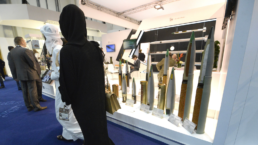
Corresponding to the swelling of Middle East arms contracts is an accelerated increase in military spending. According to the World Bank, average military spending in share of GDP was 4.9 percent in the Middle East, or twice the world’s average of 2.4 percent in 2020. SIPRI data shows that, out of the top ten military spenders in share of GDP, seven are in the MENA region and, among the top ten states in terms of military expenditure per capita, six are from the Middle East.
Recent Posts
Accountability for the Gaza Genocide Can’t Focus on Netanyahu Alone
Take Action Now Getting rid of one bad leader won’t bring justice.By Jeet Heer, The Nation On Thursday, former US Secretary of State Hillary…

25 Years of War Was the Wrong Response to 9/11
Take Action Now Both Democrats and Republicans are responsible for these counter-productive choices, and the appalling human costs of these wars on…
How Status Quo Democrats Could Create Another Trump
Take Action Now A new study suggests Democrats’ broken promises won’t just cost them elections — they could fuel an even more dangerous MAGA…

The Pentagon Asked OpenAI for Artificial Intelligence Designed to Rarely Say No
Take Action Now The U.S. military’s desire for an AI tool with “minimal refusal rates” was revealed through a FOIA lawsuit filed by The Intercept.…