By Charles Lenchner
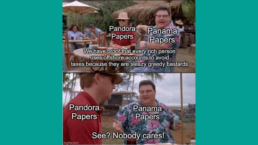
Yesterday we published the original reporting about the Pandora Papers – a treasure trove of leaked documents about the rich and powerful evading taxes. The story itself has appeared all over the place (New York Times, The Guardian, Democracy Now!) but much of the impact will be felt more strongly in smaller, poorer countries with unaccountable leaders.
One example is King Abdullah II of Jordan purchasing over $100 million in luxury properties around the world. As Deutsche Welle put it, “Though probably not illegal, they are still at odds with the government’s declared principles of financial transparency.” Combine that with the high level of repression in Jordan, the public’s lack of trust in its own government, and censorship of news about the Pandora Papers revelations, and it’s clear how information like this is profoundly destabilizing.
In Ukraine, President Volodymyr Zelensky is known for promising to tackle that country’s infamous corruption. But the Pandora Papers tell a different story. We’re likely to see more shock waves around the world as a result of the information leaked. While our own political shenanigans are crowding out international news, we’ll stay on this story.
Recent Posts

Why Do We Let Zionists Decide What We Can and Can’t Say?
Take Action Now Kraft is a man who appears in the Epstein files, was twice caught on camera with prostitutes, donates heavily to the IDF, and even…
Trump Says He’s Banning CNN, MS NOW, and Politico From the White House
Take Action Now “These outrageous attacks only demonstrate how scared he is of an informed public,” said one press freedom advocate.By Stephen…
Bases Without Names: How Governments Rebrand the U.S. Military Presence
Take Action Now Across Asia, Europe and the Middle East, governments use an expanding vocabulary to describe sites that accommodate U.S. troops,…

Getting Into ‘Good Trouble’ Over Arc de Trump
Take Action Now A retired Army colonel flew in from Hawaii to make sure Trump’s arch doesn’t go up quietlyBy Jonathan Capehart, Substack On the…