
by Jon Queally, Common Dreams
Both alarm and concern were expressed Saturday in response to new reporting about a charitable group with close ties to the U.S. Supreme Court that has been soliciting and accepting donations from corporate interests and far-right activists with cases before the court.
The New York Times exposé focused on the activities and fundraising of the Supreme Court Historical Society, a nonprofit that claims its mission is “dedicated to the collection and preservation” of the Court’s history.
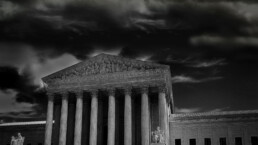
While the group refused to disclose its donors to the Times, reporters from the newspaper determine that much of the funding came from powerful companies like Chevron, Goldman Sachs, Time Warner, and Facebook as well as anti-abortion activists like Rev. Rob Schenck.
According to the newspaper:
The society has raised more than $23 million over the last two decades. Because of its nonprofit status, it does not have to publicly disclose its donors—and declined when asked to do so. But The New York Times was able to identify the sources behind more than $10.7 million raised since 2003, the first year for which relevant records were available.
At least $6.4 million—or 60 percent—came from corporations, special interest groups, or lawyers and firms that argued cases before the court, according to an analysis of archived historical society newsletters and publicly available records that detail grants given to the society by foundations. Of that, at least $4.7 million came from individuals or entities in years when they had a pending interest in a federal court case on appeal or at the high court, records show.
In the case of Chevron, the oil giant actively gave to the society even as it had a pending climate litigation working its way through the court.
In response to the new revelations, public interest attorney Steven Donzinger, who was himself targeted by Chevron for his work aimed at holding the company to account for its polluting activities in Ecuador, said the implications were “horrifying.”
“Why are these conflicts allowed?” asked Donzinger.
Others quoted by the Times said the effort by people like Rev. Schenck, who admits to using the charitable group as a way to get other anti-abortion activists closer to the justices, creates a clear conflict of interest.
Charles Fried, a Harvard Law professor who once served as solicitor general in the Reagan administration and counts himself a donor to the Historical Society, told the newspaper was so “horrified” by Schenck’s behavior that he may no longer give.
“It’s disgusting,” Fried said. “Many of the people who contribute have the same reasons I do. You go to a cocktail party and support a good cause. But it turns out that for some people it’s not that innocent.”
While the Times notes that the Historical Society is “ostensibly independent of the judicial branch of government,” the reality is that “the two are inextricably intertwined,” with court justices serving as chair of the board and hosting gala events where exclusive access is reportedly part of the allure.
The left-leaning Citizens for Responsibility and Ethics in Washington (CREW) said the reporting raises “significant questions” about the group which has “raked in millions—a significant chunk of it from groups with cases before the Court” over the last two decades.
Fix the Court, which acts as a watchdog organization for the U.S. Supreme Court, said the justification for the Historical Society’s existence just doesn’t hold water.
Recent Posts

I’ve Covered Death Row Cases for Nearly a Decade. What Happened to Christa Pike Wasn’t an Anomaly.
Take Action Now Several states have faced questions about the competence of their execution teams as major medical organizations have opposed…

Angie Nixon Says the Fight for Black Voting Power Demands Elected Officials ‘Get Louder’
Take Action Now As Black Floridians confront shrinking representation and political disillusionment, Nixon says the moment demands persistence.By…

Progressives Saw Wins in DNC, But Battle for the Future of the Party Continues
Take Action Now Resolutions calling to abolish ICE and pushing to block arms sales are laying a progressive groundwork for 2028.By Sam Rosenthal,…

Congress Must Investigate War Profiteers Once Again
Take Action Now Ninety years after the original Nye Committee exposed the arms industry’s corruption, the Pentagon and its contractors are bigger,…