
The Trump–Netanyahu Gaza Plan, presented on 29 September 2025, promises humanitarian relief, Israeli withdrawal, and Gaza’s reconstruction, yet its externally imposed structure and lack of Palestinian ownership undermine its legitimacy, feasibility, and potential for durable peace
By Sotiris Mitralexis, GeoTrends
When U.S. President Donald Trump and Prime Minister Benjamin Netanyahu presented a twenty-point framework on 29 September 2025 to terminate the Gaza genocide (as it is being unequivocally termed by nearly every international legal body possessing the authority to do so), the document was pitched as a compact of immediate humanitarian relief, a staged Israeli withdrawal, and a blueprint for the technocratic reconstruction of the Strip. The paper proposes an immediate cessation of hostilities if both parties accept, a coordinated hostage exchange with a short verification window, the demilitarisation of Hamas, and the placement of Gaza under a transitional, internationally supervised technocratic administration.
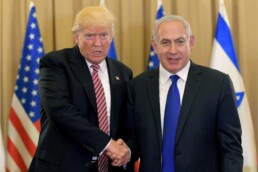
The draft President Trump discussed with representatives of Arab and Muslim countries was significantly revised by PM Netanyahu before publication, much to the dismay of Arab and Muslim interlocutors. Yet following near-universal backing, it was provisionally accepted by Hamas, which in turn proposed revisions. Irrespective of the fate of its current provisional acceptance and of the possibility of an attempt to actually implement it, however, is this a feasible plan that could deliver peace?
Ownership and legitimacy
The mechanics of the proposal reveal, on close inspection, a series of design choices that undermine its ability to stabilise the ground or to produce a durable political settlement. The first and most elemental problem is one of ownership. The plan was formulated and presented by external principals, with Israeli drafting influence acknowledged in multiple accounts, and with Palestinian participation at best peripheral.
That absence of genuine Palestinian involvement matters not as an abstract norm but as a practical precondition for implementation, because political settlements imposed from above command neither the trust nor the institutional leverage necessary to police compliance, adjudicate disputes, or absorb spoilers. Contemporary reporting makes clear that neither the Palestinian Authority nor Hamas were party to the drafting, and that Hamas was presented with a tight ultimatum to accept or face renewed force. The group’s subsequent, conditional response underscores how a paper agreement without robust Palestinian buy-in becomes a brittle instrument.
Recent Posts
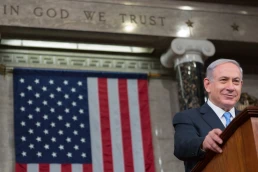
Decoding Pro-Israel Buzzwords in a Time of Genocide
Take Action Now Support for Israel has declined steeply among Americans, but its defenders continue to maintain a siege of buzzwords against…

Tax the Rich and Slash the Military Budget
Take Action Now The Left is often asked how it proposes to pay for programs like universal childcare, Medicare or All, and a green jobs program.…

Israeli Mob Beats Washington Post Journalist, Burns Olive Trees In West Bank
Take Action Now “They just kept kicking me and kicking me,” photojournalist Heidi Levine recalled from a hospital bed after the attack.By Ryan…
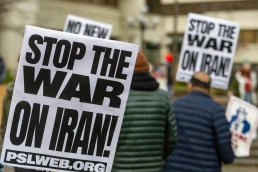
Take Action October 20 to End the Illegal U.S.-Israeli War on Iran, #PeaceWithIranNOW
Take Action Now The war is not just illegal, but massively unpopular with the U.S. public, and Trump and his Republican enablers may take a deserved…