
Can a military vet turned oyster farmer pull off an upset—and deliver?
By Rj Eskow and Graham Platner, The Zero Hour
I’m joined in this video by Graham Platner, a candidate for the U.S. Senate in Maine’s Democratic primary who says he’s “running against the billionaire class.” He’s an oyster farmer and military vet whose background includes war, local government, and community organizing. His platform takes on concentrated wealth and corporate power and calls for Medicare For All and other pro-worker policies.
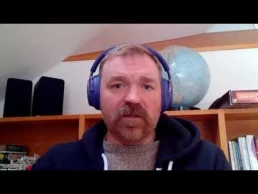
Platner’s website says, “I’m not just running against (incumbent Republican Senator) Susan Collins: I’m running against the billionaire class that owns her and all of Washington.”
As if to underscore that point, Collins is “raising more money from AIPAC than from small donors.” As Zeteo News reports, “America’s pro-Israel lobby … accounted for nearly 20% of the money that Republican Senator Susan Collins raised last year.”
As of this writing, Platner is beating establishment candidate Janet Mills in the polls—but that could change once the big money starts rolling in. Our half-hour-plus conversation covered many topics, including his controversial past comments and this question: How do we know that he won’t become another candidate who’s absorbed into the Democratic establishment’s “Borg hive mind” as soon as he goes to Washington?
“If the only way forward is to become a John Fetterman,” he said, “I’ll go back to my oyster farm.”
Platner has also said he was “very, very angry… that they sent me to fight in these goddamn wars.” I asked him, has the country fought any better wars than these in the last 75 years? His response: “There is no such thing as a better war.”
Please give it a listen.
The transcript is below.
TRANSCRIPT
(Text has been lightly edited for clarity.)
Richard Eskow: Joining me now is a candidate for the United States Senate from the great state of Maine. He could be described as an insurgent candidate from the left. He was endorsed pretty early on in the race by my former boss who is often, but not always, right. Like everybody in the world, Bernie Sanders gave him a boost; he had a couple of bumps along the way, but he keeps going and doing really well in the polls. Right now, he’s running in a primary against, I guess you could say, an establishment Democrat. And he joins us now. He is a lobster fisherman among… or is it oyster?
Graham Platner: Oysters. I’m an oyster farmer.
Richard Eskow: As soon as I said lobster, I knew it was oysters. This—but you know, from this—again, from the state of Maine, a fishing state. And he joins us now. Graham Platner, welcome to The Zero Hour.
Graham Platner: Thank you very much, Richard. It’s really a pleasure to be here.
Richard Eskow: And it’s a pleasure to have you. So let’s get this out of the way first. You know, as I mentioned before we went to air, most of my audience will know about you. Some of them will only know a story or two they’ve heard here or there, and others will be meeting you for the first time.
So, you’re an oyster farmer. You’re ex-military, an ex-military contractor, and you’ve done some work in your township—I understand—electoral work there. But, first question is: why you for Senate? What about your background makes you a good choice for Senate?
Graham Platner: I think the number one thing is that I live in the town I was born and raised in, and I moved back to Maine after my time overseas. I am very much, I would say, of the working world in Maine. I make my living on the sea as an oyster farmer and a diver. I’ve been very engaged with my community governance; I was the chair of the planning board and I was the harbormaster. Sadly, I’ve had to leave both of those for this campaign.
But I have spent much of my life personally interacting with the negatives that our system brings into people’s lives. I joined the Marine Corps out of high school and I served as a machine gunner. I fought in Fallujah and Ramadi in Iraq. And then after that, I wound up reenlisting into the United States Army and I served in Afghanistan as a rifle squad leader. I saw up close and personal the horrific outcomes of, frankly, a foreign policy based around neo-imperialism and neocolonialism.
I watched this mass expense of blood and treasure on our side and the mass suffering that we inflicted upon all these people in the countries we invaded. I saw all of it happen while completely not understanding how any of this was making the lives of people in my hometown any better. That really began to set me down a path of deeper critique—first of American foreign policy, but eventually, I think it became much more systemic.
I began to believe that the system that we live in is built specifically around enriching and consolidating power for those who are already wealthy and already have an immense amount of power. That manifests itself in pretty much every possible negative manner throughout our system: working people are always working harder than they ever have and getting less. People are losing access to healthcare, losing access to housing, losing access to free time, for God’s sake. And all of it is occurring as we witness the ultra-rich accrue more and more wealth and we watch corporate power consolidate in ways that are even new in American history.
Despite the Gilded Age, the robber barons of the 1890s would have looked with awe at what the tech billionaires today have managed to pull off. For me, I’ve been getting an upfront seat for all of this. I spent many years working really hard locally. I got very cynical, frankly; I kind of gave up on the larger political system. I thought that focusing locally was probably the only way to bring about good material change for people. The problem is, when you’re working within a larger system, there’s only just so much you can do.
Then this opportunity to run for Senate arose. I think we’re in a unique moment here in Maine with this race where someone with my politics and my background actually has a very clear opening. There’s a lot of angst and anti-establishment feeling that we need to speak to. It’s across parties; it’s everyone. Because of my background and the way my life has gone, I’m a bit more accessible to a lot of people in Maine than candidates that just come from the more establishment political world of both the Democratic Party and the Republican Party.
Richard Eskow: Yeah, I hear you. That all makes sense. For me and a lot of my audience, your platform on your website looks great. It says you’re not just running against Susan Collins; you’re running against the billionaire class. You support Medicare for All. We have too many billionaires; you want to get them out of elections. I mean, we could go through the whole thing, and we’ll get through as much as we can. But I guess I would start with this just to put your race in context.
All through the summer, there had been these rumors and ideas that the Governor, Janet Mills, would be the choice of the party—that Chuck Schumer and Washington had essentially chosen her. They’ve got their thing that chooses candidates, and they thought that she was the best one.
Graham Platner: The Governor and I, I will just say, I think disagree fundamentally on a number of policy positions. I see her very much as more of the staid establishment kind of thinking where we shouldn’t take big risks; we should always just kind of play around in the margins. It’s all about finding compromise with Republicans and doing this corporate Democrat stuff. We never really go after the systemic problems; we never really dig into those at fault and go after those who have essentially destroyed our economy—at least the economy for working people.
And then there was also this added element where I think Susan Collins is uniquely weak in this election. The story she gives—her charade of being a moderate—but she votes with the Trump administration like 95% of the time. She always—in the words of Harry Reid—Susan Collins is always there when you don’t need her. She always finds a way to vote against things, but only when it’s clear that the Republican Party is going to get it anyway.
She’s been there for 30 years. And I think right now, people are sick and tired of a politics that has in many ways immiserated their communities and themselves. They see it as a politics that’s representative of all the people that have been there. I happen to agree with that critique. I also think that running a candidate that’s chosen by Washington D.C., that is not interested in talking about any kind of systemic change, that is not interested in talking about developing a much more significant theory of power against the rise of fascism in this country—that is exactly the wrong candidate to run against Susan Collins.
I got in this race specifically because I did think the Governor was going to be the candidate. We got in, but they didn’t know we were coming. They assumed that with the sitting governor, how could this go wrong? And then we announced in August, and they essentially panicked. From the looks of it, they’re still panicking because we’re significantly up in the polls. Our fundraising numbers blow hers out of the water. And we’re building a movement on the ground, which is really the goal of this campaign.
Richard Eskow: Let’s get this out of the way first. I do not want to spend too much time on it, but there was this controversy. People wrote you off. Last year you were “done” as far as the media was concerned because you had this tattoo that was a skull and crossbones that turned out to be a Nazi symbol.
Graham Platner: It’s a skull and crossbones that was similar to one that some neo-Nazis and some German army units used. Although to be fair, it’s also a skull and crossbones that non-Nazi units also use. I’ve seen it all over. I’ve done a lot of deployments; I saw it all over the world on all kinds of different outfits. But it’s… or at least very… I mean, it’s a skull and crossbones. There are only so many variations.
Richard Eskow: And I actually looked at it. It does have a similarity. But I would also say that I’m half Jewish and I’ve lived a long time. I had a Bar Mitzvah, as a matter of fact, so I got the ticket punched. And I didn’t know it was a Nazi skull and crossbones when I first saw it. So I don’t know why people are thinking you should know.
I think one of the lessons of various races—whether it’s Zohran Mamdani, Bernie’s race 10 years ago, or the near win in Nebraska of an independent candidate—is that what people in the media and political consultant circles assume are your fatal errors are turning out not to be. In some cases, “effing up” in one way or another, or not abiding by the rules because you didn’t spend your whole life thinking you were going to go into politics, makes you more relatable. It certainly doesn’t seem to have hurt you. You are doing really well against Janet Mills and beating her in most polls.
Graham Platner: Pretty much the only ones where we aren’t, frankly, are not really well-done polls. They all get ripped apart by actual pollsters. But in the comprehensive polls—whether we do them or whether they are independent ones—we’re usually up 15 to 30 points in the primary.
Richard Eskow: And when is the primary?
Graham Platner: June 9th.
Richard Eskow: June 9th. So there is some time there, and this would not be a time to get overconfident. Big money may step in big time for Janet Mills because I’ve seen that pattern time and again.
Graham Platner: Yes, indeed. We expect that fully.
Richard Eskow: It seems as if there’s an opening there. But let me ask you a tough question—tough in the sense of tough to answer honestly. A lot of people on the left have this post-traumatic stress: we invest our emotions in a person, we contribute, we work—we go all out for Fetterman or whoever—and then they turn around and it’s almost like the “Democratic Borg” collective wraps its arms around them. Or even worse, they go “full Fetterman” or “full Tulsi” and go all the way to the other side. How can you reassure those people that if they back you, you’ll be true to your values once you get to Washington?
Graham Platner: John Fetterman is the bane of my existence. That man’s name comes up to me far more than I would like it to. I’m going to say a couple of things. One, there were signs with people like Tulsi and Fetterman—folks who clearly had intense political ambitions and had been trying to get into politics for years.
This is my first foray into electoral politics. My background is in community organizing on the local level and local governance. Luckily, here in the state of Maine, it’s a small state. Those of us organizing around social and economic justice know each other. I’m a relatively known entity in the organizing space, which is how this all came to me in the first place. This was not my idea. I was approached. I didn’t wake up one day thinking I should be a U.S. Senator. That’s insane. My wife and I make 60 grand a year and we work really hard.
The other thing is that if you look at my policy platform, I’ve got a very clear political foundation. I’m not looking for a politics to get me elected; I’m running on my politics. I believe that fundamentally we have an economy that requires democratization. We need to reorient how power works and take the power of money out of the hands of those who have been using it to influence our politics.
Part of one of those “scandals” was that I used to post on the internet. There are 13 years of me giving my opinions in a pretty unvarnished manner with language that is very salty—primarily because I came out of the Marine Corps—and with opinions that I held in a previous part of my life that I don’t hold now because I’ve learned new things. But throughout all of it, it’s fairly clear where my economic thinking lies. I never expected anybody to read that stuff.
My wife and I live a wonderful life that we worked very hard to build. It’s simple but fulfilling. We have to lose all of that to do this. This isn’t worth doing to me if I’m not going to be able to remain steadfast in the politics I think is necessary to change this country for the better. If somebody tells me the only way forward is for me to become a John Fetterman, I’m going to go back to my oyster farm because I’m happier there anyway.
Richard Eskow: My personal advice: keep the oyster farm. Let me ask another tough question. You talk about how we’re spending too much money on the military and it has to be redirected. But you also talk about shipbuilding. I’m not really sure we need to compete with China on shipbuilding. Does this mean Platner is really going to fight to cut that military budget, or does it really mean “smarter, better wars”?
Graham Platner: There is no such thing as a “better war.” I’ve been to war. War is just… I’m not a pacifist, but I am absolutely anti-war in my thinking. It’s very difficult for me to find examples in history in which the amount of suffering and death expended ever works out well for working folks.
When I talk about rebuilding the U.S. military, I mean the military in its current state is not really made for national defense. It is made for imperial conflict, military adventurism, and it’s all made specifically around the concept of making somebody money. National defense should be a national project, not a corporate project.
I believe a country needs to defend itself in some fashion, but we have a military built to project force around the world. I believe in international institutions and international law. I’m an internationalist, definitely not an isolationist. But the internationalism I believe in is one in which we use cooperation to chase corporate money around the globe. That’s a better use of policy than invading Iraq or kidnapping the president of Venezuela.
Naval procurement is a hobby of mine. The United States Navy—because we have created this behemoth that isn’t focused on defense—doesn’t build ships that meet the actual needs of the United States. We had the Littoral Combat Ship program, which was the Navy trying to get into counterinsurgency. We spent all this money on a ridiculous concept that everyone today agrees was a complete waste of time. I do think a robust Navy for a nation with two oceans is not a ridiculous thing, but I want it to be built for the actual defense of the country, not mostly to keep BAE, Raytheon, and General Dynamics in profit.
Richard Eskow: General Dynamics, which owns Bath Iron Works—2.3% of the Maine workforce. You mentioned international relations. Should the United States obey international law and international courts?
Graham Platner: Yes, without question.
Richard Eskow: That would have avoided the Gaza adventure altogether. Now, tell us about the organizing dimension of your campaign before you go.
Graham Platner: My background is as a community organizer. I read Jane McAlevey and took labor organizing trainings, which I then took out into my community in Eastern Maine. This race is a vehicle for organizing. To me, most electoral campaigns are just “elite performances” with consultants and ads. That’s not politics to me. Politics is about power, and power for people comes from organizing.
We cannot rely on existing institutions to build us something else. We need to build our own power, use those institutions where necessary, and dismantle them where they are of no help. The campaign is about building a broad coalition of labor unions, community organizations, and civil rights advocates. We want to train people to be organizers so they can engage with existing local groups.
The only reason we keep losing is because those with power keep telling us we’re not worthy of wielding it. We have forgotten a story we used to know: that organizing and fighting is what you need to do. That’s how we got the labor movement, the eight-hour workday, the civil rights movement, and women’s suffrage. That did not come around because everybody just waited for a Congressman to change it. This campaign is a big organizing and education project to build an organized working class in Maine for the fights to come.
Richard Eskow: One bonus question: how seriously do you take the “Trump threat”—using the “F-word,” fascism?
Graham Platner: I take the fascism of the Trump administration very seriously. I also think there are a lot of people in the Democratic Party that like to use that word to fundraise and then turn around and not use an ounce of their power to truly resist. Liberal capitalist parties throughout history have done this exact same thing, and they always lose to fascism because you actually have to fight it tooth and nail from the beginning.
People ask me, “What if there isn’t an election?” My answer is that the preparation is exactly the same: we need to build organizational capacity, relationships, and trust. If we don’t start now, we may lose the election, or we won’t be able to fight back if there isn’t one. Either way, we cannot rely on the leadership of the Democratic Party at this point. They seem to be unaware of what’s going on.
I think a lot of us saw this coming, so a lot of us have been working on this for a long time. It’s one of the reasons I got in this race when I did.
Recent Posts

Two Thirds of People Arrested by ICE in Minnesota Surge Had No Criminal Records, New Data Reveals
Take Action Now The White House had said all the thousands of people arrested were “dangerous criminal” immigrants.By Meghnad Bose and Luke…

BREAKING: Israel Approves Extreme Death Penalty Law Targeting Only Palestinians
Take Action Now Monday’s vote in the Knesset to impose a one-sided death penalty bill on Palestinians will further cement Israel’s system of…

‘Erasing The Lines’: How Settler Outposts Are Seizing New Regions of the West Bank
Take Action Now After decades consolidating their control over Area C, Israeli settlers are expanding into Areas B and A — nominally under…
Cory Booker Says Democrats Have ‘Failed This Moment’ And Calls For New Leaders
Take Action Now Senator’s comments come amid growing divisions within the party, which he says has ‘too small of a coalition’By José Olivares, The…