
Biden’s threat risks “helping to bring about a Taiwan conflict,” said one foreign policy scholar. “Self-injurious and entirely unforced.”
By Kenny Stancil, Common Dreams
Critics of U.S. imperialism sounded the alarm Monday after President Joe Biden said that he would use military force in response to a Chinese invasion of Taiwan.
“That’s the commitment we made,” Biden said at a press conference held jointly with Japanese Prime Minister Fumio Kishida during a visit to Tokyo, abandoning the “strategic ambiguity” that U.S. presidents have long maintained to obscure how far Washington would go to protect Taiwan, which China considers part of its territory.
“We agreed with the One China policy, we signed on to it,” said Biden, “but the idea that [Taiwan] can be taken by force… it’s just not appropriate.”
Biden has provided billions of dollars in weapons to help Ukraine stave off Russia’s ongoing military assault but refused to deploy U.S. troops for fear of triggering a direct confrontation between the world’s leading nuclear powers. However, he said Monday, the U.S. would go further on behalf of Taiwan.
“You didn’t want to get involved in the Ukraine conflict militarily for obvious reasons,” a reporter said to Biden. “Are you willing to get involved militarily to defend Taiwan if it comes to that?”
“Yes,” Biden responded tersely. The president argued that the need for the U.S. to intervene in Taiwan if China attacks the island is “even stronger” following Russia’s invasion of Ukraine.
As the New York Times reported:
The White House quickly tried to deny that the president meant what he seemed to be saying. “As the president said, our policy has not changed,” the White House said in a statement hurriedly sent to reporters. “He reiterated our One China Policy and our commitment to peace and stability across the Taiwan Strait. He also reiterated our commitment under the Taiwan Relations Act to provide Taiwan with the military means to defend itself.”
But Mr. Biden’s comments went beyond simply reiterating that the United States would provide Taiwan with arms, because the question was posed as a contrast to what he had done with Ukraine. The president made no effort to qualify what he intended when he agreed that he would “get involved militarily.”
“It is truly dangerous for the president to keep misstating U.S. policy toward Taiwan,” historian Stephen Wertheim, a senior fellow in the American Statecraft Program at the Carnegie Endowment for International Peace, wrote on social media. “How many more times will this happen?”
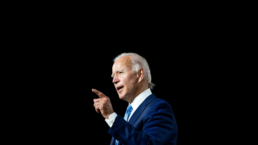
This is not the first time Biden has “ignored the practiced imprecision of his predecessors with regard to China and Taiwan,” the Times noted.
Last August, in an attempt to reassure allies following the withdrawal of U.S. troops from Afghanistan, Biden promised that “we would respond” if a fellow NATO member were attacked. “Same with Japan, same with South Korea, same with Taiwan,” he added.
However, the Times reported:
Taiwan… has never been granted the same U.S. security guarantees as Japan, South Korea, or America’s NATO allies, and so the comment was seen as significant. Two months later, Mr. Biden was asked during a televised town hall if the United States would protect Taiwan from attack. “Yes, we have a commitment to do that,” he said. That also set off a frantic scramble by the White House to walk back his remark by insisting that he was not changing longstanding policy.
According to Wertheim, “The West’s robust response to Russian aggression in Ukraine could serve to deter China from invading Taiwan.”
“But Biden’s statement risks undoing the potential benefit and instead helping to bring about a Taiwan conflict,” he stressed. “Self-injurious and entirely unforced.”
The president’s remarks came just before he formally unveiled the Indo-Pacific Economic Framework (IPEF), a new 13-nation trade pact meant to advance U.S. corporate interests and counter Chinese influence in the region. Though it excludes Taiwan in a diplomatic nod to China, the IPEF has already been criticized by the Trade Justice Education Fund for partnering with countries that have “abysmal labor rights records.”
“Biden escalates tensions through a trade deal to secure U.S. interests in Asia and the Pacific and threatens U.S. military retaliation against China,” tweeted journalist Nick Estes. “The forever war continues.”
Recent Posts
‘Proven Leaders and Voices of Clarity’: Progressives Urge Ocasio-Cortez and Khanna to Enter 2028 Presidential Race
Take Action Now “AOC and Khanna… have shown a willingness to blaze unusual and much-needed trails on Capitol Hill beyond the constraints of the…

‘Hit the Brakes’: Anthropic CEO’s Push to ‘Pace’ AI Development Called Latest Sign Congress Must Act
Take Action Now “When the future of humanity is at stake we need a PAUSE on advanced AI development and a ban on artificial superintelligence,” said…
Accountability for the Gaza Genocide Can’t Focus on Netanyahu Alone
Take Action Now Getting rid of one bad leader won’t bring justice.By Jeet Heer, The Nation On Thursday, former US Secretary of State Hillary…

25 Years of War Was the Wrong Response to 9/11
Take Action Now Both Democrats and Republicans are responsible for these counter-productive choices, and the appalling human costs of these wars on…