
Across Asia, Europe and the Middle East, governments use an expanding vocabulary to describe sites that accommodate U.S. troops, aircraft, weapons, equipment and logistical systems.
By Mohammed Abunahel, World BEYOND War
From “Forces of allied and friendly nations” in Jordan to “agreed locations” in the Philippines and a “rotational presence” in Australia, governments use legal and diplomatic language that avoids describing facilities hosting U.S. forces as military bases. Yet changing the terminology does not change these sites’ military function.
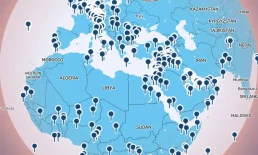
When Jordanian Foreign Minister Ayman Safadi rejected claims that his country hosted U.S. military bases, he did not deny the presence of American troops. Instead, he said they were stationed at Jordanian military bases under a defense cooperation agreement for Military training and described the presence of U.S. bases as forces “of allied and friendly nations with whom we cooperate on defense and training.”
The distinction was carefully constructed. The forces were American, but the bases were Jordanian. The foreign military presence was acknowledged, while the politically sensitive label, “U.S. military base”, was rejected.
Jordan is not an exception. Across Asia, Europe and the Middle East, governments use an expanding vocabulary to describe sites that accommodate U.S. troops, aircraft, weapons, equipment and logistical systems. They speak of “agreed locations”, “joint-use facilities”, “rotational deployments”, “defense cooperation”, “host-nation support” and, most revealingly, “places, not bases”.
These terms do not necessarily describe imaginary legal distinctions. The land may remain under the sovereignty of the host state, and the United States may neither own nor formally lease it. Yet focusing exclusively on ownership obscures a more important question: What military functions does the site perform?
Defining a Foreign Military Base by Function
This article adopts a functional definition of a foreign military base rather than relying on the designation preferred by the host or operating government.
World BEYOND War’s global military bases project defines a foreign base as “any installation, facility, or site located outside the operating country that is financed, operated, leased, rented, or temporarily accessed by that country. These bases accommodate military personnel, weapons systems, and/or logistical infrastructure, and fulfill diverse functions such as training, information gathering, operational planning, command and control, administrative tasks, and/or weapons storage. Regardless of their size or permanence, these bases inherently support military objectives that may include preparation for or facilitation of military interventions or warfare.”
Under this definition, legal ownership, size and permanence determine the type and scale of a base, not whether it is a base at all.
A facility does not cease to be a foreign military base because the host government owns the land. Nor does it cease to be one because the soldiers rotate, because access is described as temporary, or because local forces use the same runway.
When U.S. personnel, aircraft, weapons, equipment or logistical infrastructure are accommodated outside the United States for military purposes, that site forms part of the U.S. foreign basing network—whatever diplomatic description appears in the agreement.
This definition is broader than the definitions used by many governments. That is precisely why it is analytically useful: it prevents official terminology from determining in advance what the investigation is supposed to establish.
Jordan: U.S. forces in bases that are “not American”
Safadi’s formulation captures the central contradiction. According to remarks reported by the Qatar News Agency, U.S. forces are stationed at Jordanian military bases under a defense cooperation agreement. He placed their presence within Jordan’s wider cooperation with allied and partner countries.
This description focuses on legal ownership: the facilities belong to Jordan, and therefore the government does not classify them as U.S. bases.
According to the Congressional Research Service, the agreement provides U.S. forces, personnel and contractors with “unimpeded access to and use” of agreed facilities and areas.
The U.S.–Jordan Defense Cooperation Agreement, which entered into force in 2021, presents a more operational picture. The permitted activities include:
- Visits; training; exercises; maneuvers
- Transit; support and related activities
- Refueling of aircraft; landing and recovery of aircraft
- Accommodation of personnel; communications
- Staging and deploying of forces and materiel
- Pre-positioning of equipment, supplies, and materiel
- Security assistance and cooperation activities
- Humanitarian and disaster relief
- Contingency operations.
Under a narrow ownership-based definition, these remain Jordanian bases. Under the functional definition adopted here, they are also U.S. foreign military bases because they accommodate and support U.S. forces and military operations.
These two descriptions are not mutually exclusive. A facility can be Jordanian in ownership and sovereignty while simultaneously forming part of the U.S. overseas military network.
The insistence that it is “not an American base” therefore does not settle the question. It redirects attention from military use to legal title.
Singapore: the honesty of “places, not bases”
Singapore provides perhaps the clearest expression of this strategy: “places, not bases.”
The phrase emerged from Singapore’s defense relationship with Washington following the closure of major U.S. bases in the Philippines. Under a 1990 memorandum of understanding, U.S. forces gained access to Singaporean air and naval facilities.
According to Singapore’s Ministry of Foreign Affairs, the U.S. Navy became the largest foreign “trading partner” in one place, “foreign investor” in another place, and “foreign user” of Changi Naval Base. U.S. ships and aircraft use Singaporean facilities for transit, refueling, resupply and repair.
A separate official Singaporean account acknowledged that these facilities supported U.S. operations during the Gulf wars and the war in Afghanistan.
“Places, not bases” may sound like a denial, but it is also an unusually candid description of the modern basing model. The United States does not need to own separate territory or maintain a permanently stationed force to gain the military advantages traditionally provided by a base.
It needs reliable access to runways, deep-water ports, maintenance facilities, fuel, supplies and communications.
The base has not disappeared. Its functions have been distributed across facilities formally controlled by the host government.
For Singapore, the terminology preserves its policy of avoiding formal military alliances and demonstrates that its facilities are not exclusively American. For Washington, it provides the access needed to sustain regional operations without the political burden of a traditional overseas garrison.
The Philippines: The Return of the Bases Under Another Model
The Philippines formally ended the large-scale U.S. basing presence at Subic Bay and Clark Air Base in the early 1990s. Yet under the Enhanced Defense Cooperation Agreement, U.S. forces have returned through access to what are officially called “agreed locations”.
The Philippine government insists that these are Philippine bases, not American ones. The Philippine News Agency has reported the government’s position that there are no U.S. military bases in the country and that the sites remain under Philippine control.
This is accurate in terms of ownership. But the agreement allows U.S. forces to access the sites, construct facilities, and preposition equipment.
The linguistic shift is politically significant. “U.S. base” recalls a colonial and postcolonial history of large, permanent American installations. “Agreed location” instead emphasizes Philippine consent and sovereignty.
Yet for military planning, the sites provide many of the same essential functions: access, storage, infrastructure, deployment, and proximity to potential theatres of conflict.
Rather than restoring the old bases in their previous form, the agreement establishes a dispersed and politically more adaptable basing system. The flag remains Philippine, but the facilities form part of the infrastructure through which U.S. power can be projected.
Australia: Temporary Soldiers, Permanent System
Australia describes the growing U.S. military presence through the language of “force posture initiatives” and “rotational presence”.
The Marine Rotational Force–Darwin deploys U.S. Marines to northern Australia for part of each year. Cooperation has expanded to include U.S. air, naval and army capabilities, accompanied by infrastructure for fuel, munitions, maintenance and logistics.
The Australian Department of Defense presents these deployments as initiatives designed to strengthen interoperability and the bilateral alliance.
“Rotational” distinguishes the presence from permanent stationing. Individual units arrive and depart, and the same personnel do not remain indefinitely.
But the focus on personnel obscures the system’s permanence. If one unit leaves as another prepares to arrive, while fuel storage, ammunition facilities, communications systems, and logistical infrastructure remain in place, the presence is continuous even if every deployment is technically temporary.
Rotation describes how the base is staffed, not whether the base exists.
The term’s political advantage is obvious. A “rotational presence” sounds limited and reversible. A “permanent U.S. military base” suggests a deeper transfer of strategic autonomy. Yet both can provide Washington with recurring and predictable access to territory, infrastructure, and regional operating space.
Finland and Sweden: “No Bases” With Exclusive U.S. Areas
Finland offers one of the strongest examples of the gap between official denial and operational authority.
The Finnish Ministry of Defense states that the United States will not establish military bases in Finland. Instead, U.S. forces may use 15 existing Finnish military facilities and areas.
The same official explanation confirms that the agreement enables:
- The presence and training of U.S. forces;
- Prepositioning of defense equipment and supplies;
- Unimpeded access to agreed facilities;
- Transit and staging of forces and materiel;
- S. investment in construction and infrastructure;
- Portions designated for exclusive U.S. access and use.
This produces a revealing formula: no U.S. bases, but agreed sites containing areas reserved exclusively for U.S. forces.
Legally, Finland retains sovereignty. Functionally, however, these sites accommodate U.S. military personnel, equipment, construction and operations. Under the definition adopted in this article, they are U.S. foreign military bases situated within Finnish-owned installations.
The U.S.–Sweden Defense Cooperation Agreement employs similar language. It grants U.S. forces unimpeded access to agreed facilities for training, maneuvers, transit, aircraft refueling, vessel bunkering, maintenance, accommodation, communications, deployment, prepositioning and contingency operations.
It also allows U.S. forces to control entry into portions provided for their exclusive use. Calling such a site an “agreed facility” may correctly describe its legal basis. It does not negate its function as a foreign military base.
Norway: Reinforcements Without “Foreign Bases”
Norway also refers to “agreed facilities and areas” under its Supplementary Defense Cooperation Agreement with the United States.
According to the Norwegian government, the sites may be used by Norwegian, U.S. and other allied forces for multiple military purposes.
The government presents the agreement as a way to enable the rapid arrival of U.S. reinforcements during war or crisis, support infrastructure development, and increase joint training.
Again, sovereignty remains formally Norwegian. But the facilities are incorporated into American and NATO military planning. They are prepared in advance to receive personnel, equipment and forces for possible operations.
The absence of a permanently stationed U.S. garrison does not eliminate their basing function. It means that these are bases designed for rapid activation or for continuous occupation.
Japan: paying for a Foreign Presence Without Changing Its Name
Japan uses the legal expression “facilities and areas” for sites used by U.S. forces. Its Status of Forces Agreement grants the United States the use of these facilities and allows U.S. authorities to take measures necessary for their establishment, operation, safeguarding and control.
The Japanese Ministry of Foreign Affairs uses this terminology even when discussing locations commonly recognized as U.S. military bases.
Japan also uses the phrase “host-nation support” for the public funding provided to sustain the U.S. military presence. According to the ministry, this includes expenditure on labor, utilities, facility improvements and training equipment.
The terminology reframes the cost of maintaining foreign bases as a contribution to alliance “readiness and resiliency”. Rather than debating whether Japanese taxpayers are financing U.S. bases, the policy is presented as shared support for collective security.
This is another function of diplomatic language: it does not merely rename the physical site; it also redefines who benefits from it and how its costs should be understood.
Why Governments Avoid the Word “Base”
The repeated use of these terms across different political systems is not accidental. It performs several related functions.
First, Reducing Domestic Political Opposition
A foreign military base can evoke occupation, dependency, colonial history, and the loss of sovereignty. It can also raise fears that the host country will become a target or be drawn into a war it did not choose.
“Friendly forces” and “joint training” sound cooperative. “A foreign military base” sounds like a concession of territory and political autonomy.
Alexander Cooley’s study Base Politics: Democratic Change and the U.S. Military Overseas demonstrates that overseas basing agreements are shaped by domestic political competition, elections, democratization and elite interests within host countries.
Terminology helps governments secure domestic acceptance for arrangements that might encounter greater resistance if described more directly.
Second, Preserving Formal Sovereignty
Changing the label helps preserve the appearance of sovereignty. By calling a site an “agreed facility” or a “joint-use location” rather than a U.S. base, the host government can emphasize its continued ownership while downplaying the operational powers granted to Washington. Sovereignty is thus presented through legal title and national symbolism, even when control over access and military use has been fully or partly transferred.
But sovereignty is not indivisible in practice. A government may retain ownership while granting another state operational access, exclusive areas, tax privileges, criminal-jurisdiction arrangements and authority to control entry.
The question is not simply who owns the land. It is who can use it, for what purposes and under what restrictions.
Third, Making Permanence Appear Temporary
“Rotational” and “temporary” are among the most politically useful terms. They focus attention on the length of an individual deployment rather than the continuity of the overall system.
If troops rotate indefinitely, equipment remains stored, infrastructure continues to expand and the next unit arrives after the previous one departs, the operating presence is permanent even when each deployment is temporary. Temporary personnel can operate a permanent base.
Fourth, Increasing U.S. Military Flexibility
Washington also benefits from avoiding the traditional basing model. Large permanent bases are expensive, politically visible and vulnerable to attack.
A network of smaller access points, prepositioning sites and joint-use facilities can disperse forces while allowing rapid expansion during a crisis. The U.S. Air Force itself has used the phrase “places, not bases” when discussing its infrastructure strategy in the Indo-Pacific.
The terminology therefore reflects more than public relations. It corresponds to a strategic shift towards distributed military infrastructure.
Fifth, Separating Presence from Responsibility
Ambiguous language also allows host governments to distinguish between accommodating U.S. forces and endorsing every operation those forces conduct.
When controversy arises, officials can emphasize that the facility remains nationally owned and that access is governed by consultation. Yet whether a government can actually prevent the site’s use in a particular operation depends on the agreement, the balance of power between the parties and the transparency of their decision-making. Formal sovereignty does not necessarily guarantee meaningful operational control.
The Pentagon’s Own Alternative Vocabulary
The avoidance of “base” is not limited to host governments. The Pentagon has developed its own classifications for overseas installations.
The U.S. Government Accountability Office has documented three principal categories:
- Main operating bases, with large permanently stationed forces and extensive infrastructure;
- Forward operating sites, with smaller permanent or rotational forces and scalable infrastructure;
- Cooperative security locations, with little or no permanent U.S. presence but maintained through periodic access, contractors or host-nation support.
These distinctions are operationally useful, but they also demonstrate why counting only officially designated “U.S. bases” produces an incomplete picture.
A cooperative security location may have no permanently stationed American troops. Yet it may contain equipment, logistical arrangements and contingency access that enable military operations.
The personnel are absent until needed; the basing relationship already exists.
Not Every Military Visit Is Identical, but the Function Matters
Adopting a broad functional definition does not mean that every base is equivalent.
A large installation such as Al Udeid in Qatar differs substantially from a port periodically accessed by U.S. warships. A permanently staffed command headquarters is not identical to an airfield prepared for emergency use. A weapons-storage site performs a different function from a training range.
These differences should be identified through subcategories: permanent, rotational, prepositioning, logistics, training, intelligence, command, transit, or contingency-access bases.
But those differences should not be used to erase the wider category.
The size of a site determines its scale. The frequency of access determines its activation level. The degree of U.S. control determines its operational autonomy. None of these factors changes the underlying fact that the site supports a foreign military outside its own territory.
Naming Is Part of the Base
A base is not only concrete, runways, and fences. It is also the legal and political arrangement that makes military access possible.
The language surrounding that arrangement is therefore not separate from the base. It is part of the infrastructure that sustains it.
“Agreed location” emphasizes consent. “Joint use” emphasizes sovereignty. “Rotational presence” denies permanence. “Training” minimizes operational purpose. “Host-nation support” reframes public expenditure. “Friendly forces” transforms a foreign military presence into a relationship of partnership.
Each term selects one legally defensible aspect of the arrangement while directing attention away from its broader military function.
Government statements may be technically accurate within carefully chosen legal definitions, yet still create a misleading public impression. The analytical task is therefore to examine how those definitions narrow the meaning of a “base”, which military functions they conceal, and whether the terminology reflects the reality of foreign access and operational control.
A Finnish facility can remain Finnish property and still be a U.S. foreign military base. A Philippine location can remain under Philippine sovereignty and still serve U.S. military operations. An Australian deployment can be rotational and still constitute a permanent basing system. A Jordanian base can remain under Jordanian command while accommodating American personnel, aircraft, equipment, and logistical infrastructure.
The Question Governments Prefer Not to Answer
The central question should not be: What does the government call the site? It should be:
- Are foreign military personnel accommodated there?
- Are aircraft, weapons or equipment deployed or stored there?
- Does the foreign military finance or construct infrastructure?
- Can it control access to any portion of the facility?
- Does the site support surveillance, command, communications or operational planning?
- Can forces be staged or deployed from it?
- Does it facilitate military intervention or warfare?
If the answer to one or more of these questions is yes, the site performs a foreign military basing function. The name may shape public perception. It does not determine what the military can do there.
Modern military power no longer depends exclusively on enormous overseas garrisons bearing the flag of the operating country. It increasingly relies on networks of shared facilities, rotational forces, prepositioned weapons, logistical hubs and contingency-access agreements.
The traditional base has not disappeared. It has been broken into functions, distributed across multiple locations and concealed behind a vocabulary of cooperation.
Regardless of what governments call them, any sites accommodating U.S. personnel, aircraft, weapons, equipment, or logistical systems for military purposes remain part of the U.S. foreign military basing network.
A base does not cease to be a base because its name has changed.
How Governments Describe U.S. Military Access Without Calling It a “Base”
The following table brings together some of the most common official terms used by host governments, defence ministries and military alliances when describing the presence, activities and infrastructure of U.S. forces. These expressions are not necessarily inaccurate, but they often emphasize cooperation, access or temporary functions while avoiding the politically sensitive language of foreign military bases.
| English term | What might it mean in practice? |
| Friendly forces | Foreign forces present under an agreement with the host state. |
| Allied forces | U.S. forces presented within an alliance or NATO framework. |
| Partner forces | Language that avoids describing the relationship as hosting foreign troops. |
| Defence cooperation | A broad framework encompassing troops, facilities, training and armaments. |
| Strategic defence partnership | A long-term military presence presented as a reciprocal partnership. |
| Defence arrangements | Arrangements governing the presence of foreign forces without using the word “bases”. |
| Military presence | Acknowledgement of foreign troops without classifying the facilities as American. |
| Rotational presence | Forces deployed in regular cycles rather than described as permanently stationed. |
| Rotational deployment | Units rotate periodically while the military presence continues in practice. |
| Forward presence | Forces positioned close to operational theatres or perceived adversaries. |
| Forward command | A U.S. command headquarters located outside the United States. |
| Force posture | The geographical distribution of military forces, equipment and infrastructure. |
| Force Posture Initiatives | A comprehensive programme for U.S. deployments and supporting infrastructure. |
| Reinforcements | Forces deployed during a crisis, exercise or period of heightened tension. |
| Agreed locations | National military sites that U.S. forces are permitted to access and use. |
| Agreed facilities and areas | Designated sites at which U.S. forces receive specified access and use rights. |
| Available facilities | Facilities placed by the host government at the disposal of U.S. forces. |
| Joint use | U.S. use of a facility that formally remains a national installation under host-state sovereignty. |
| Joint access | Access and use rights granted to both parties. |
| Access to facilities | Permission to use airports, ports and military installations without transferring ownership. |
| Places, not bases | An extensive U.S. presence presented as access to host-state facilities rather than foreign bases. |
| Support facilities | Installations providing communications, maintenance, supply or accommodation services. |
| Host Nation Support | Host-state financing of some costs associated with U.S. forces and installations. |
| Naval Support Activity | A naval military installation that may perform many functions associated with a full-scale base. |
| Operations centre | A command-and-control installation not formally described as a base. |
| Forward headquarters | A regional U.S. command headquarters located within a host-state installation. |
| Interoperability | Aligning forces, weapons and communications systems with those of the U.S. military. |
| Joint activities | Military training, operations or movements conducted by two or more forces. |
| Training and exercises | The stated justification for the entry and temporary presence of foreign forces. |
| Exchange of expertise | The presence of foreign trainers, advisers or specialised units. |
| Capacity building | Training, arming and developing the structures of the host state’s armed forces. |
| Military advisers | Foreign military personnel whose role is officially defined as advisory. |
| Advisory mission | The continuation of a foreign military presence after the declared end of a combat mission. |
| Training mission | A military deployment presented as non-combat in character. |
| Counterterrorism cooperation | A functional framework for the presence of U.S. forces and intelligence capabilities. |
| Logistical support | Warehousing, transportation, fuel, ammunition and maintenance. |
| Transit point | Use of a location to move troops, aircraft or vessels. |
| Refuelling and resupply | Core basing functions performed without designating the location as a base. |
| Staging | Assembling forces and equipment before moving them into an operational theatre. |
| Prepositioning | Storing weapons, equipment and supplies before the arrival of deployed forces. |
| Prepositioned materiel | U.S. military equipment stored in the host state for an extended period. |
| Contingency operations | Use of designated sites during wars, crises or other unforeseen operations. |
| Port calls | Periodic access by warships to host-state ports. |
| Military facilities or access arrangements | Rights to use ports, airports and other military installations. |
| Deterrent presence | Forces presented as instruments of protection and deterrence rather than as a foreign deployment. |
| Assurance measures | Allied troop deployments intended to reassure the host state. |
| Protection of the flank | Framing the U.S. presence as part of NATO’s collective defence. |
| Bilateral security cooperation | Continued U.S. military activity following a change in the formal name of the mission. |
| Status of Forces | The legal framework governing foreign forces, their privileges and jurisdictional status. |
Recent Posts

Voters in Key States See AI Campaign Cash as More Politically Toxic Than AIPAC: Poll
Take Action Now “Candidates should seek support from the AI industry at their own peril.”By Jake Johnson, Common Dreams Polling data released…
Everything You’ve Been Told About Lethal Injection Is a Lie
Take Action Now Death by drugs is brutal—and designed for political optics. Christa Pike’s failed execution pulled back the curtain.By Arianna…
British Support For Israel Is Shattering
Take Action Now There is not a single member of the Foreign and Commonwealth Office who believes that Israel, under any leadership, would allow a…
I’ve Covered Death Row Cases for Nearly a Decade. What Happened to Christa Pike Wasn’t an Anomaly.
Take Action Now Several states have faced questions about the competence of their execution teams as major medical organizations have opposed…