
As the temporary parole status granted for Afghan refugees nears its end, advocates say passing the Afghan Adjustment Act is more important than ever.
by Alexandra Martinez, Prism
It’s been over a year since U.S. forces abruptly left Afghanistan, leaving the Taliban in control of the country and forcing tens of thousands of Afghans to evacuate for their safety. Since the takeover in Aug. 2021, over 82,000 Afghan refugees have arrived in the U.S., seeking a pathway to citizenship and stability. While all Afghan refugees have been granted humanitarian parole for two years—a temporary status that authorizes refugees to remain in the country for a temporary period of time—the parole does not provide a pathway to permanent lawful status. Afghan refugees and activists have been calling for an Afghan Adjustment Act for over a year, but Republican lawmakers have gutted every attempt to pass the policy over what they say are security concerns. With only one year left before their parolee status expires, Afghan refugees say it is more important than ever to ensure this legislation gets passed.
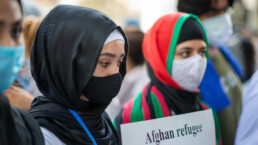
“An Afghan Adjustment Act would be a clear and quicker pathway to get our green card, and it will help a lot of Afghans directly,” said Zahra Ahmadi, who arrived from Afghanistan in Sept. 2021 and works as an employment specialist for the International Institute of New England. “If it’s not passed, I think it will make it very complicated and very difficult for Afghans because they would have to go through an expensive and very complicated process to get citizenship.”
If the Afghan Adjustment Act does not get passed, at least 36,000 refugees will be forced to enter the already backlogged asylum processing system, where there are currently 470,000 pending cases. The process can take years before a determination is made, which is economically burdensome for refugees who cannot afford an immigration attorney. In the interim, though refugees have been granted temporary work authorization, many remain with legal uncertainty hanging over their heads and a fear of returning to their homeland.
Recent Posts

ICC Targets Smotrich For War Crimes— He Responds by Promising More War Crimes
Take Action Now Smotrich reportedly bragged about helping create more than 100 new settlements and 160 farming outposts, while the U.N. has reported…

Establishment Democrats Still Don’t Get Why They Lost in 2024
Take Action Now No amount of messaging acumen could have plastered over the gaping hole in Harris’ campaign: a total dearth of popular policies.By…
The CIA Goes to Cuba
Take Action Now After decades of covert operations, the CIA director has given the Cubans an overt ultimatum for change on the island.By Peter…

Minnesota Officials Charge ICE Agent Who Shot Venezuelan Immigrant & Falsely Reported What Happened
Take Action Now “That is what democracy looks like. It looks like separation of powers and getting material consequences [for] wrongdoing,” she……