
Governments are failing to protect workers from extreme heat, so it’s no surprise labor actions have been heating up too.
By Farrah Hassen, Otherwords
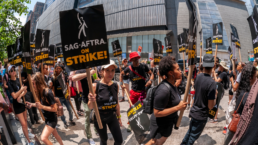
This summer has been a hot one for labor as strikes and other worker actions have swept the country. At the same time, workers have been toiling in one of the hottest summers ever recorded due to the ongoing climate emergency. This has put millions at greater risk of heat-related illness and death.
The 340,000 UPS workers, represented by the Teamsters union, made excessive heat in the workplace a top priority in their recent contract negotiations with the company. Between 2015 and 2022, at least 143 UPS employees had been hospitalized for heat injuries, according to company records obtained by the Washington Post.
To protect their health, workers demanded that UPS provide air conditioning in their signature delivery trucks. For the first time, the company agreed to equip them in all new delivery vehicles. But it’s outrageous that UPS workers had to bargain over the basic human right to a safe workplace while their CEO took home $19 million last year.
Federal and state governments, meanwhile, have largely taken a hands-off approach to protecting workers facing such dangerous conditions.
In the midst of an unprecedented heatwave, Texas Governor Greg Abbott recently signed a bill that will rescind mandatory rest and water breaks for construction workers. “It’s inhumane and cruel,” remarked Eva Marroquin, who cleans up construction sites in the Austin area.
Abbott’s egregious move grabbed national headlines, but it’s not just Texas workers who are vulnerable.
Regulations protecting outdoor workers from heat have only been implemented in a handful of states, including California, Washington, Oregon, and Colorado. Indoor workers, such as those employed at warehouses without air conditioning systems, also lack heat safety regulations in most states.
No federal laws currently impose heat safety standards for workplaces. In 2021, President Biden ordered the Occupational Safety and Health Administration (OSHA) to produce heat safety standards, but the agency still hasn’t issued them.
Anticipating that workers would face life-or-death summer heat, attorneys general from seven states petitioned OSHA to issue an emergency temporary order earlier this year that would require employers to provide water, rest breaks, and shade when temperatures top 80°F. The agency refused.
As heat records continue to be broken, the dangers are overwhelmingly borne by workers whose jobs directly expose them to heat, like farmworkers, construction workers, landscapers, and maintenance workers, among others. These jobs are predominantly low-income and more often held by people of color.
In San Antonio, a 24-year-old construction worker, Gabriel Infante, died this July from severe heat stroke. A 29-year-old farmworker in South Florida, Efraín López García, died that same month after experiencing symptoms consistent with heat illness. Extreme heat killed another young farmworker in Florida earlier this year after his employer failed to provide water breaks and shade.
Sadly, these and many more worker deaths across the U.S. could have been avoided.
President Biden has taken small steps to address this health threat. His Acting Labor Secretary Julie Su issued the first heat hazard alert reminding employers of their responsibility “not to assign work in high heat conditions without protections in place for workers.”
But for workers and their families, an “alert” is no replacement for a nationwide, legally enforceable heat standard that must be issued as quickly as possible. Absent an OSHA standard, Congress and states can still act to protect workers.
Workers’ lives are on the line. Until they are safe on the job, there will be many more “hot labor summers” in the forecast.
Farrah Hassen, J.D., is a writer, policy analyst, and adjunct professor in the Department of Political Science at Cal Poly Pomona. This op-ed was distributed by OtherWords.org.
Recent Posts
Trump Says He Is in ‘Deciding Mode’ on Destroying Iran
Take Action Now The Pentagon’s own death count is undercounting US troops killed in the seven-month war, the Washington Post has reported.By…

In the Age of AI, Nuclear Weapons Abolition Is a Renewed Imperative
Take Action Now As long as we have nuclear weapons, the job of ending humanity will continue to be as easy as the push of a button—or an AI agent…
Why Do We Let Zionists Decide What We Can and Can’t Say?
Take Action Now Kraft is a man who appears in the Epstein files, was twice caught on camera with prostitutes, donates heavily to the IDF, and even…
Trump Says He’s Banning CNN, MS NOW, and Politico From the White House
Take Action Now “These outrageous attacks only demonstrate how scared he is of an informed public,” said one press freedom advocate.By Stephen…