
The consequences of the illegal invasion of Iraq still shape geopolitics today.
by Helena Cobban, Globalities
The history of U.S. foreign policy since the end of the Cold War can be seen as a litany of forceful regime-change projects undertaken in other countries around the world, with the force used being sometimes military, sometimes economic, sometimes both. Among these projects, the invasion of Iraq launched twenty years ago, on March 19, 2023, stands out for several reasons. These include the scale of the military operations involved, the level of the destruction inflicted on Iraq, and the jaw-dropping effrontery of the decision Pres. George W. Bush had taken to launch the war without any authorization from the United Nations.
Throughout the post-Cold War era, government officials and members of the (often fawningly compliant) U.S. punditocracy have cloaked most of Washington’s regime-change projects in some form of “humanitarian” or “international law” justification. The invasions of Afghanistan and Iraq were, in their initial inception, different. The main driver of the decision to invade Afghanistan was angry revenge for the attacks of 9/11. The excuse used for invading Iraq was the (quite unsubstantiated) allegation that Pres. Saddam Hussein was manufacturing chemical or biological weapons. In both those cases, though, the original “reason” for the invasion was soon adorned with all kinds of other gauzy, feel-good justifications, usually lumped together under the rubric of “nation-building.” In the case of Iraq, after Pres. Hussein was removed by force of U.S. arms, his ruling Baath Party would be speedily disbanded and a democracy would magically be planted in Iraq featuring a new Constitution; a court system capable of conducting war-crimes trials; a decentralized political system; a flourishing free-market economy; and even—as many of the invasion’s most ardent proponents hoped—peace with Israel. The template that many of the war’s planners seemed to be using for their post-war planning was that of the Allied occupations of Germany or Japan in 1945.
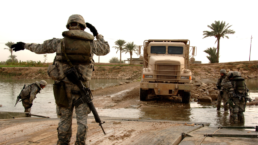
As we know, almost none of those oft-touted goals were achieved—or, when they were, they proved of little or no value to Iraq’s people. Iraq did, at a formal level, get a new Constitution; but the version adopted foisted onto the country a “muhasasa” system of divvying up the top posts along sectarian lines, such as had already, for many decades prior, proven deeply dysfunctional in Lebanon. Iraq did get some political decentralization (as foisted onto it by numerous DC politicians including then-Senator Joe Biden, who had earlier voted enthusiastically for the invasion itself.) But Iraq’s decentralization did not prevent the intrusion into its political sphere of numerous powerful militias or, in 2014, the explosive arrival of the completely new and disruptive political force IS, the Islamic State.
Recent Posts

‘Hit the Brakes’: Anthropic CEO’s Push to ‘Pace’ AI Development Called Latest Sign Congress Must Act
Take Action Now “When the future of humanity is at stake we need a PAUSE on advanced AI development and a ban on artificial superintelligence,” said…
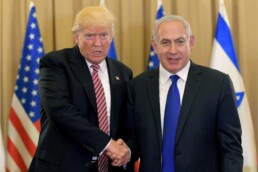
Accountability for the Gaza Genocide Can’t Focus on Netanyahu Alone
Take Action Now Getting rid of one bad leader won’t bring justice.By Jeet Heer, The Nation On Thursday, former US Secretary of State Hillary…

25 Years of War Was the Wrong Response to 9/11
Take Action Now Both Democrats and Republicans are responsible for these counter-productive choices, and the appalling human costs of these wars on…
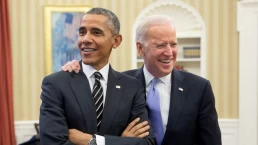
How Status Quo Democrats Could Create Another Trump
Take Action Now A new study suggests Democrats’ broken promises won’t just cost them elections — they could fuel an even more dangerous MAGA…