
This is what climate change should have taught us.
by Rajan Menon, Tom Dispatch
Washington’s vaunted “rules-based international order” has undergone a stress test following Russia’s invasion of Ukraine and here’s the news so far: it hasn’t held up well. In fact, the disparate reactions to Vladimir Putin’s war have only highlighted stark global divisions, which reflect the unequal distribution of wealth and power. Such divisions have made it even harder for a multitude of sovereign states to find the minimal common ground needed to tackle the biggest global problems, especially climate change.
In fact, it’s now reasonable to ask whether an international community connected by a consensus of norms and rules, and capable of acting in concert against the direst threats to humankind, exists. Sadly, if the responses to the war in Ukraine are the standard by which we’re judging, things don’t look good.
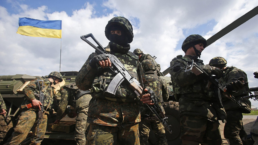
After Russia invaded, the United States and its allies rushed to punish it with a barrage of economic sanctions. They also sought to mobilize a global outcry by charging Putin with trashing what President Biden’s top foreign policy officials like to call the rules-based international order. Their effort has, at best, had minimal success.
Yes, there was that lopsided vote against Russia in the United Nations General Assembly, the March 2nd resolution on the invasion sponsored by 90 countries. One hundred and forty-one nations voted for it and only five against, while 35 abstained. Beyond that, in the “global south” at least, the response to Moscow’s assault has been tepid at best. None of the key countries there — Brazil, India, Indonesia, and South Africa, to mention four — even issued official statements castigating Russia. Some, including India and South Africa, along with 16 other African countries (and don’t forget China though it may not count as part of the global south), simply abstained from that U.N. resolution. And while Brazil, like Indonesia, voted yes, it also condemned “indiscriminate sanctions” against Russia.
Recent Posts
Bases Without Names: How Governments Rebrand the U.S. Military Presence
Take Action Now Across Asia, Europe and the Middle East, governments use an expanding vocabulary to describe sites that accommodate U.S. troops,…

Getting Into ‘Good Trouble’ Over Arc de Trump
Take Action Now A retired Army colonel flew in from Hawaii to make sure Trump’s arch doesn’t go up quietlyBy Jonathan Capehart, Substack On the…

AIPAC’s Network Has Already Spent $67.2 Million to Shape the Midterm Elections
Take Action Now The giant influx from American Israel Public Affairs Committee PACs is a case study in money distorting politics.By Derek Seidman,…

Ed Sheeran’s Craven “Neutrality” Is a Watershed Moment for Mainstreaming Palestine Solidarity
Take Action Now Ed Sheeran’s entire tour quitting in solidarity with Palestine and Macklemore proves the logic of BDS.By Natasha Lennard, The…