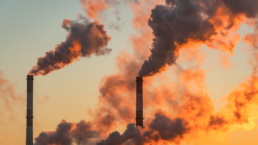
Vast fortunes rely on destroying our planet. Taxing those fortunes to fund climate action could give us a shot at survival.
By Basav Sen and Bob Lord, Inequality.org
On April 25, Twitter’s board of directors announced an agreement to sell the company to Elon Musk, the world’s wealthiest person, for $44 billion. That sounds like a lot of money. But Musk can afford it. One recent estimate of the Musk fortune puts his wealth at $214 billion, a sum a bit down from the more than quarter trillion he held earlier this year.
Our Institute for Policy Studies colleague Chuck Collins has documented that Musk’s personal wealth, over the first year and a half of the Covid pandemic, grew by an incredible 751 percent at the same time millions of American families were struggling to pay their rent and utility bills.
Unfortunately, we can’t write Musk off as some sort of an anomaly. U.S. billionaires combined increased their wealth by a staggering $2.1 trillion over the first year and half of the pandemic. All those trillions could now be addressing a host of serious crises at home and internationally. Those dollars could be charting the world on a new sustainable course. Instead they’re merely making the already rich phenomenally richer.
Not my fault, says Elon Musk, who loves to claim that he’s doing his part — as the driving force behind the world’s biggest electric-car company — to save our planet.
Should we be giving Musk the applause he feels he so richly deserves? Let’s step back for a moment and take a closer look at where grand fortunes, Elon Musk, and Tesla fit into our menacing big picture.
Let’s start with greenhouse gas emissions. Worldwide, these emissions have grown steadily over the last several decades. They have, to be sure, declined in the United States since their 2007 peak, but their rate of decline comes nowhere close to what we need. At the current decline rate, we’ll still be emitting 3.6 billion metric tons of greenhouse gases annually in 2050. By that year, scientists tell us, we will need to have emissions down to zero.
Recent Posts

Midterms Have Revived Universal Healthcare Debate. These States Are Ahead of Everyone.
Take Action Now States have often served as laboratories to test health policies later implemented nationally.By Markian Hawryluk, KFF Health……
Nobel Peace Prize Turns Toward Peace in 2026
Take Action Now To have finally acknowledged someone whose work in any way addressed the horrors of Zionism is an encouraging sign from the Nobel…
64 Groups to Congress: Start Preparing Tough and Effective Oversight Right Now
Take Action Now The question is not whether the public wants accountability, but whether Congress can conduct the meaningful oversight that exposes…

“Abolish ICE”: Protests Erupt in NYC After ICE Agents Shoot Father With 5-Year-Old Son in Car
Take Action Now “Candidates should seek support from the AI industry at their own peril.”By Amy Goodman, Darializa Avila Chevalier, and Carmen De…