
Despite Putin’s stated emphasis on speedy nuclear modernization, several big-ticket systems have been plagued by multi-year delays and—in some cases—abrupt cancellations.
By Matt Korda, Outrider
In recent weeks, a fair amount of speculative ink has been spilled about the prospect of Vladimir Putin using nuclear weapons to achieve his war aims in Ukraine.
Thankfully, despite Putin’s overt nuclear signaling, the conflict remains well below the nuclear threshold. However, this doesn’t mean that Putin’s war in Ukraine won’t have potentially profound long-term consequences for Russia’s nuclear arsenal––specifically, its ability to complete its modernization program on time in the face of overwhelming sanctions.
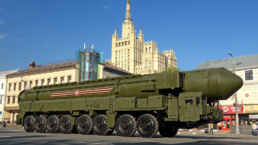
Russia is in the midst of a decades-long nuclear modernization campaign to replace all of its Soviet-era weapons with new systems by the mid-2020s. This modernization is the top priority for both Russia’s military and for Putin.
In his annual end-of-year speech in 2020, Putin underscored the importance of keeping pace with Russia’s nuclear competitors: “It is absolutely unacceptable to stand idle. The pace of change in all areas that are critical for the Armed Forces is unusually fast today. It is not even Formula 1 fast – it is supersonic fast. You stop for one second, and you start falling behind immediately.”
Despite Putin’s stated emphasis on speedy nuclear modernization, several big-ticket systems have been plagued by multi-year delays and––in some cases––abrupt cancellations. These chronic delays have affected some of the most highly anticipated delivery systems in Russia’s nuclear arsenal.
Russia’s new Sarmat intercontinental ballistic missile (ICBM) was supposed to be operational by 2018 but wasn’t even flight tested until April 2022. Additionally, in 2018, Russia also postponed the Rubezh ICBM––originally intended to be one of the primary carriers for Russia’s Avangard hypersonic glide vehicle––and canceled the development of a rail-based ICBM known as Barguzin. The development of both Russia’s new Borei ballistic missile submarines and their Bulava submarine-launched ballistic missiles (SLBMs) were delayed by several years, along with the development of the next-generation PAK-DA strategic bomber.
All this is to say, Russia’s nuclear modernization hasn’t exactly been “Formula 1 fast.”
Recent Posts

“Propaganda Show”: IDF Raids Palestinian NGOs in the West Bank Ahead of Israeli Elections
Take Action Now “The raid onto the city center Ramallah is not a lonely activity. It happens every day that they raid different villages,…

ICE Planning $100 Million ‘Nightmare’ Domestic Spy Program
Take Action Now Under ERO ONE, Immigration and Customs Enforcement plans to hire 142 intelligence contractors with top secret clearances and deploy…

Postpone the AI Public Offerings Until Congress Acts
Take Action Now A company should not disclose a risk of catastrophe to humanity and then sell its shares to the public before any public authority…

Congress Has The Power to Fix the Trump-Saudi Nuclear Deal
Take Action Now Congress has at least 9 months and considerable leverage to make things right.By Alan J. Kuperman, Bulletin of the Atomic…