
Will relentless war imagery lead the people of the U.S. to reexamine this country’s militarism in this century and its role in other wars in places we’ve done our best never to see from the inside?
By Nan Levinson, Tom Dispatch
I’ve been watching this country at war for many years now and, after 9/11, began spending time with American veterans who came to disdain and actively oppose the very conflicts they were sent to fight. The paths they followed to get there and the courage it took to turn their backs on all they had once embraced intrigued and impressed me, so I wrote a book about them. While doing so, I was often struck by a strange reality in that era of American war-making: in a land where there was no longer a draft, most Americans were paying remarkably little attention to our ongoing wars thousands of miles away. I find it even stranger today — and please note that this takes nothing away from the misery of the Ukrainian people or the ruthlessness of Vladimir Putin’s invasion — that the public seems vastly more engaged in a war its country is not officially fighting than in the ones we did fight so brutally and unsuccessfully over the past two decades.
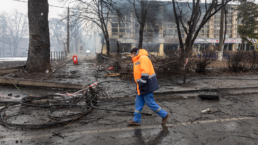
Here, for instance, are just a few notes I took recently while listening to NPR: A woman calls one of its talk shows, feeling guilty about celebrating her daughter’s birthday in style when Ukrainians are suffering so horribly. A panel on a different NPR show discusses why Americans feel so involved and its members consider all-too-uncomfortably the rationale that the Ukrainians “look like us.” The show’s host does note that they don’t actually look like all of us, but no one suggests that decrying atrocities is easier when they’re committed by another country, especially one we never much liked to begin with.
Need more? Scott Simon, a popular NPR host, concludes an opinion piece about a 91-year-old Jewish woman who survived the Holocaust and died during the siege of Mariupol this way: “Whether in Bosnia, Rwanda, Xinjiang, Bucha, Kharkiv, or Mariupol, ‘Never Again’ seems to happen again and again.” Note the absence from that list of Afghanistan, Iraq, or Yemen.
And what about that people-like-us biz? “We are all Americans,” Le Monde declared after the 9/11 attacks. Are we all Ukrainians now? And does that explain the amnesia and whitewashing of American war policy in this century — or the implicit racism of it all? There’s something odiously revealing about our tendency to divide people caught in this planet’s wars into worthy and unworthy victims, the first deserving our sympathy (of course!), the second evidently deserving their fate.
Recent Posts
Angie Nixon Says the Fight for Black Voting Power Demands Elected Officials ‘Get Louder’
Take Action Now As Black Floridians confront shrinking representation and political disillusionment, Nixon says the moment demands persistence.By…
Progressives Saw Wins in DNC, But Battle for the Future of the Party Continues
Take Action Now Resolutions calling to abolish ICE and pushing to block arms sales are laying a progressive groundwork for 2028.By Sam Rosenthal,…
Congress Must Investigate War Profiteers Once Again
Take Action Now Ninety years after the original Nye Committee exposed the arms industry’s corruption, the Pentagon and its contractors are bigger,…
Christa Pike Hospitalized in Critical Condition After Botched Execution
Take Action Now “I’ve never seen anything like what we saw Wednesday night,” said one reporter who witnessed the execution attempt.By Amy Goodman,…