
In 2022, the relationship between wealth, emissions, and climate catastrophe has become ever clearer.
By Aviva Chomsky, TomDispatch
Three years after the end of World War II, diplomat George Kennan outlined the challenges the country faced this way:
“We have about 50% of the world’s wealth, but only 6.3% of its population. In this situation, we cannot fail to be the object of envy and resentment. Our real task in the coming period is to devise a pattern of relationships which will permit us to maintain this position of disparity without positive detriment to our national security.”
That, in a nutshell, was the postwar version of U.S. exceptionalism and Washington was then planning to manage the world in such a way as to maintain that remarkably grotesque disparity. The only obstacle Kennan saw was poor people demanding a share of the wealth.
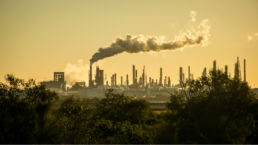
Today, as humanity confronts a looming climate catastrophe, what’s needed is a new political-economic project. Its aim would be to replace such exceptionalism and the hoarding of the earth’s resources with what’s been called “a good life for all within planetary boundaries.”
Back in 1948, few if any here were thinking about the environmental effects of the over-consumption of available resources. Yet even then, however unknown, this country’s growing wealth had a dark underside: the slow-brewing crisis of climate change. Wealth all too literally meant the intensified extraction of resources and the production of goods. As it happened, fossil fuels (and the greenhouse gases that went with their burning) were essential to every step in the process.
Today, the situation has shifted — at least a bit. With approximately 4% of the world’s population, the United States still holds about 30% of its wealth, while its commitment to over-consumption and maintaining global dominance remains remarkably unshaken. To grasp that, all you have to do is consider the Biden White House’s recent Indo-Pacific Strategy policy brief, which begins in this telling way: “The United States is an Indo-Pacific power.” Indeed.
In 2022, the relationship between wealth, emissions, and climate catastrophe has become ever clearer. In the crucial years between 1990 and 2015, the global economy expanded from $47 trillion to $108 trillion. During that same period, global annual greenhouse-gas emissions grew by more than 60%. Mind you, 1990 was the year in which atmospheric levels of carbon dioxide (CO2) first surpassed what many scientists believed was the level of safety — 350 parts per million, or ppm. Yet in the 32 years since then, more CO2 and other greenhouse gases have been emitted into the atmosphere than in all of history prior to that date, as atmospheric CO2 careened past 400 ppm in 2016 with 420 ppm now fast approaching.
Recent Posts
‘Proven Leaders and Voices of Clarity’: Progressives Urge Ocasio-Cortez and Khanna to Enter 2028 Presidential Race
Take Action Now “AOC and Khanna… have shown a willingness to blaze unusual and much-needed trails on Capitol Hill beyond the constraints of the…

‘Hit the Brakes’: Anthropic CEO’s Push to ‘Pace’ AI Development Called Latest Sign Congress Must Act
Take Action Now “When the future of humanity is at stake we need a PAUSE on advanced AI development and a ban on artificial superintelligence,” said…

Accountability for the Gaza Genocide Can’t Focus on Netanyahu Alone
Take Action Now Getting rid of one bad leader won’t bring justice.By Jeet Heer, The Nation On Thursday, former US Secretary of State Hillary…

25 Years of War Was the Wrong Response to 9/11
Take Action Now Both Democrats and Republicans are responsible for these counter-productive choices, and the appalling human costs of these wars on…