The Democratic left bets it can win more by working with the House Speaker. That could cost them.
By Katya Schwenk, Luke Goldstein, and Freddy Brewster, The Lever
At the Brooklyn election-night victory party this past June for insurgent New York congressional candidate Claire Valdez, the crowd was jubilant — until a familiar face appeared on a screen at the bar: Rep. Hakeem Jeffries, the Democratic minority leader.
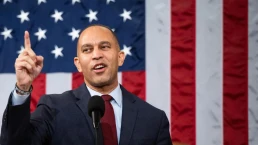
The crowd erupted in boos at the sight of the congressman, who represents a nearby district. “You’re next,” attendees cried. Though they were on Jeffries’ home turf, the crowd was ready to unseat the party leader and the corporate-backed political machine that, in their eyes, he represented.
@hasanthehun Resounding boos at Valdez HQ as Hakeem Jeffries goes on NY1 https://t.co/qAfu3gszZH
— Nick Garber (@nick_garber) June 24, 2026
As primary elections in New York and beyond rejected establishment Democrats and sent a new generation of insurgents toward Congress, voters have continued to sour on Jeffries. According to an October poll of likely voters in two swing states and 11 other districts across the country, a plurality of Democrats say they don’t want Jeffries as speaker should their party regain control of the House.
But now, days from a general election that is increasingly likely to deliver the chamber to Democrats, progressive politicians and strategists tell The Lever there is no organized effort to field an alternative. On the contrary, Jeffries is poised to take the gavel, which will ultimately require help from the insurgent faction promising to challenge his center-left agenda.
Why are progressives, fresh off victories against the Democratic establishment, falling in line behind its leader before the midterm elections have even happened?
Recent Posts

U.S. Sharing Nuclear Technology With Saudi Arabia Is a Bad Deal
Take Action Now This is an obvious, preventable step toward the proliferation of nuclear weapons.By Emma Claire Foley This July, the U.S. and…

Government Corruption a Top Issue for U.S. Midterm Voters, Exclusive Poll Finds
Take Action Now Harris poll for Guardian finds 76% believe officials care more about self-enrichment than helping everyday AmericansBy Lauren…

Radical Centrists Like Haley Stevens Are the Real Extremists in the Democratic Party
Take Action Now By endorsing Abdul El-Sayed’s opponent for Israel’s sake, Stevens shows how the real threat to progress comes from centrists.By…

From ‘hope and change’ to MAGA fascism
Take Action Now He bailed out Wall Street financiers who helped create the Great Recession of 2008, allotting 700 million dollars of public money to…