Federal data reveal the plan does little to stop drilling and may push future development into Indigenous communities.
By Mark Armao, Grist
In November, under a high sky in northwestern New Mexico, U.S. Interior Secretary Deb Haaland stepped proudly to the podium against a backdrop of sandstone bluffs. She was flanked by Pueblo leaders who had gathered that day to commemorate the recently announced protections for Chaco Culture National Historical Park, where ancestral Puebloans created a sprawling center of trade and culture from the tawny-colored rock more than a thousand years ago.
“It is not difficult to imagine centuries ago children running around the open space, people moving in and out of doorways, bringing in their harvest or preparing food for seasons to come,” Haaland said of the Chaco complex, where multi-story ruins rise from the floor of a wide canyon. “We’re here because President Biden and I heard your voices and are taking important steps to take care of our land, our air, and our water.”
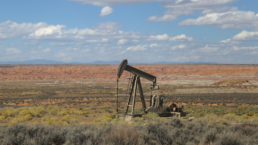
Haaland’s speech came days after the Department of Interior announced it was considering a 20-year moratorium on new federal oil and gas leasing within a roughly 10-mile radius around the park, an approximately 950,000-acre area referred to as the buffer zone. Along with shielding the site from fracking facilities that have encroached on the area in recent years, the action was touted as part of the Biden administration’s larger effort to curb greenhouse-gas emissions while promoting environmental justice and tribal consultation.
But a review of federal leasing data by Grist suggests that the protections are a superficial fix, as they will likely do little to impede the recent influx of oil and gas development. Although the federal government plans to prevent new leasing on hundreds of thousands of acres within the Chaco buffer zone, oil and gas companies with existing leases can continue to extract minerals within its boundaries.
Recent Posts
Trump Says He’s Banning CNN, MS NOW, and Politico From the White House
Take Action Now “These outrageous attacks only demonstrate how scared he is of an informed public,” said one press freedom advocate.By Stephen…
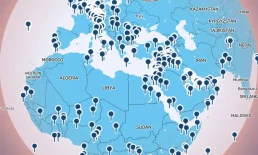
Bases Without Names: How Governments Rebrand the U.S. Military Presence
Take Action Now Across Asia, Europe and the Middle East, governments use an expanding vocabulary to describe sites that accommodate U.S. troops,…
Getting Into ‘Good Trouble’ Over Arc de Trump
Take Action Now A retired Army colonel flew in from Hawaii to make sure Trump’s arch doesn’t go up quietlyBy Jonathan Capehart, Substack On the…

AIPAC’s Network Has Already Spent $67.2 Million to Shape the Midterm Elections
Take Action Now The giant influx from American Israel Public Affairs Committee PACs is a case study in money distorting politics.By Derek Seidman,…