
For decades, the Pentagon Papers whistleblower filled notebooks with reflections on war, conscience, and hope. His family discusses what they reveal.
Interview, Current Affairs

While most Americans are familiar with the story of the Pentagon Papers, far less is known about the man who risked everything to leak them. Released posthumously in 2026, Truth And Consequence: Reflections on Catastrophe, Civil Resistance, and Hope is a stunning collection of Ellsberg’s previously unpublished writings, exploring the inner world of America’s most famous whistleblower: from his continuous anti-war activism and advocacy against nuclear weapons, to his personal struggles surrounding the death of his mother and sister as a teenager.
Compiled from decades of handwritten notebooks and journal entries, the book offers an intimate portrait of Ellsberg’s moral and intellectual life, revealing the convictions that shaped his extraordinary career. Current Affairs sat down with Ellsberg’s sons, Robert and Michael, and his longtime assistant Jan Thomas—the latter two of whom co-edited the volume—to discuss Ellsberg’s legacy and what readers can still learn from his example.
Nathan J. Robinson
I wanted to start with you, Jan, if you could talk a little bit about the material that we have here, what Daniel Ellsberg wrote over all these years, during which he was publishing very little, but he was writing all these thoughts. So tell us a little bit about what comprises this new collection.
Jan Thomas
So he, throughout the years, would routinely and deeply engage with his writing in his notebooks, and he was writing thoughts that he was not sharing. You didn’t know necessarily what was on his mind, but he had a very deep conversation with himself in these notebooks. And at the end of his career, we were preparing to send off his papers to the archive, and it just seemed as though, let’s wait a second here.
There was something important that was being captured as he was contemporaneously going through these events and having deep thoughts about them. Let’s see what’s there. So that began a process of harvesting what ended up being 600 file boxes worth of material that were dug through to pull out the notebooks, go through them carefully, and look for things that would comprise a book.
Robinson
And just staying with you for a moment, Jan, what is it that you found so compelling about these notes when you started deciphering them and understanding what he’d been thinking about and writing down all of these years? Other than the fact that obviously Daniel Ellsberg is an important figure in 20th-century history, what is it about these thoughts that you felt were so important that they be shared?
Thomas
Well, I think that there was a compelling nature and a distillation of his thinking. When you’re handwriting something, you have to slow down and just get to the gist, and that was the quality of his writings. He really was harvesting deep reflections about things. He wasn’t going on and on about them to then get to the point. The point was what he wrote. And so it’s a really direct way to engage in a conversation with his inner conversation, his moral complexities and quandaries that he was sorting out.
So we can ride along with him through time, through 50 years of him having these frequent sessions with his notebooks, which he believed was only for himself. He never intended any of this material to be public, but when we saw the accumulated pieces, it just seemed as though it was going to fall into an amazing book, and that’s what happened.
Recent Posts
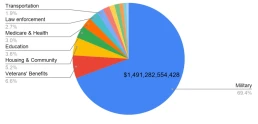
FACT SHEET: Trump’s Proposed $1.5 Trillion War Budget in Three Charts
Take Action Now Trump’s Pentagon hike would send war spending to nearly 70 percent of discretionary funds. Most would benefit weapons…

Israeli Settlers Killed His Constituent. Fetterman Is Sole Democrat Against Investigating Them.
Take Action Now Despite support from other Democrats, the Senate voted 51–47 against a resolution to force U.S. probes on killings of Americans in…

The Movement to Abolish ICE Is Gaining Momentum
Take Action Now As activists rally around federal legislation to dismantle ICE, Amnesty International joins the call for abolition.By Mike Ludwig,…

Wanted: An Organized Political Movement to Counter the AI Oligarchs
Take Action Now History teaches us that the American people are capable of building great movements against powerful corporate interests. Let’s hope…