
Much of the criticism of Ken Martin is deserved. But his actions are symptomatic of a party that fails to listen to the grassroots
By Norman Solomon, The Guardian
Ken Martin is now a convenient scapegoat. As chair of the Democratic National Committee, he has stumbled into disrepute as a dubious fundraiser and bad-tempered boss who bungled an autopsy report on the 2024 election disaster. Much of the criticism is justified. But Martin is just a symptom of what deeply ails a party that does not live up to its name.
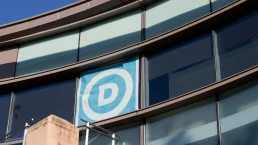
As the Democratic party’s governing body, the Democratic National Committee has long operated as a fortress for party elites who expect to get their way. Martin seemed to offer a bit of a departure when, as Minnesota party chair, he won the committee leadership election last year in part because of his close ties with other state party chairs. They remain among his strongest supporters. That’s one reason why Martin is very well-positioned to fend off any challenge to his hold on power when the full committee meets next week in Austin.
But a more basic dynamic protecting Martin is the committee’s internal culture of conformity. Most of its 450 members would not dream of publicly challenging the chair, despite the recent torrent of bad press.
News media have hammered on the fact that the DNC is $2.2m in debt while the Republican National Committee reports $128m in cash on hand. Yet depictions of the DNC’s financial woes have given short shrift to some relevant factors. For instance, after Kamala Harris spent $1.5bn during her short presidential campaign in 2024, the DNC took on about $22m in debts that she left behind.
Martin has fulfilled his promise to send more money to state parties. In April 2025, the DNC announced: “Each state party will receive a baseline of $17,500 a month, a $5,000 per month increase over the last agreement, and Republican-controlled states will receive an additional investment of $5,000 a month.” What happens to that no-strings money, however, is a whole other question.
“When we’re talking about giving tens of thousands of dollars away on a monthly basis, we need to know that it’s going towards real, grassroots organizing,” Chris Davis, the president of Colorado Young Democrats, told me. “Money received by each state party from the DNC needs to be tied to deliverables that will directly grow the party, such as direct voter engagement through canvassing, having a presence in community spaces like tabling on college campuses or large community gatherings, or building the party’s following through organic social media engagement. Otherwise, the money could be going to consultants, for all we know.”
The prevailing criticism is that Martin has failed to take full advantage of the party’s biggest donors and fundraisers. The emphasis on the importance of well-heeled patrons is telling. It says a lot about prevailing assumptions that the party should be largely dependent on – and responsive to – the rich.
The DNC’s business model involves catering to – and relying on – big donors. A current somber refrain from news media and some party operatives is that Martin has lost the confidence of party backers who can write big checks. His response, in an essay posted on 20 July, underlines the problem. Martin trumpeted success with “grassroots donors” – whom he defined as people giving “under $10,000”. And he touted an upsurge in funding from the super wealthy during the last year and a half, writing: “The current DNC secured contributions of $100,000 or more from 67 donors.”
Rarely mentioned is the truth that he and other party leaders have lost the confidence of countless small-dollar donors, who’ve shown ample capacity to provide fully adequate national funding hauls if inspired, as during the 2016 and 2020 Bernie Sanders presidential campaigns. But it would be hard to find more uninspiring Democratic leaders than the party’s most visible and powerful ones, Senator Chuck Schumer and Representative Hakeem Jeffries.
Recent Posts

Angie Nixon Says the Fight for Black Voting Power Demands Elected Officials ‘Get Louder’
Take Action Now As Black Floridians confront shrinking representation and political disillusionment, Nixon says the moment demands persistence.By…

Progressives Saw Wins in DNC, But Battle for the Future of the Party Continues
Take Action Now Resolutions calling to abolish ICE and pushing to block arms sales are laying a progressive groundwork for 2028.By Sam Rosenthal,…

Congress Must Investigate War Profiteers Once Again
Take Action Now Ninety years after the original Nye Committee exposed the arms industry’s corruption, the Pentagon and its contractors are bigger,…

Christa Pike Hospitalized in Critical Condition After Botched Execution
Take Action Now “I’ve never seen anything like what we saw Wednesday night,” said one reporter who witnessed the execution attempt.By Amy Goodman,…