
Congress is now attempting to end the Iran war without President Donald Trump’s approval. The House of Representatives is invoking the War Powers Resolution, potentially setting the stage for a legal showdown over the limits of executive power.
By David Sirota, Jacobin
For the first time since the start of the Iran war, Congress has attempted to circumvent President Donald Trump and end the conflict without his approval. In the process, lawmakers took a step toward creating conditions for a first-of-its-kind legal showdown clarifying the legislative branch’s constitutional authorities under the long-standing War Powers Resolution.

On Wednesday, the Republican-controlled US House passed a measure ordering the president to “remove United States Armed Forces from hostilities against the Islamic Republic of Iran.” Notably, the legislation was a “concurrent resolution,” which is only required to pass both the House and Senate — and is not subject to presidential veto. Under the text of the 1973 War Powers Resolution, only a concurrent resolution is required to end a war — though the authority of that text remains in dispute.
As recounted in a new episode of the Lever’s podcast Master Plan, this particular power has never been tested at the Supreme Court. In the past, Congress has passed joint resolutions that required a president’s signature — and that were subsequently vetoed.
If the Senate now passes the same concurrent resolution that the lower chamber just passed, lawmakers could have standing to go to court to request the judiciary enforce the measure under section 5(c) of the War Powers Resolution. That provision declares that any time troops are deployed in hostilities “without a declaration of war or specific statutory authorization, such forces shall be removed by the President if the Congress so directs by concurrent resolution.”
Recent Posts
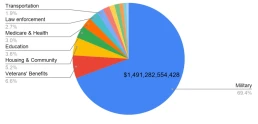
FACT SHEET: Trump’s Proposed $1.5 Trillion War Budget in Three Charts
Take Action Now Trump’s Pentagon hike would send war spending to nearly 70 percent of discretionary funds. Most would benefit weapons…

Israeli Settlers Killed His Constituent. Fetterman Is Sole Democrat Against Investigating Them.
Take Action Now Despite support from other Democrats, the Senate voted 51–47 against a resolution to force U.S. probes on killings of Americans in…

The Movement to Abolish ICE Is Gaining Momentum
Take Action Now As activists rally around federal legislation to dismantle ICE, Amnesty International joins the call for abolition.By Mike Ludwig,…

Wanted: An Organized Political Movement to Counter the AI Oligarchs
Take Action Now History teaches us that the American people are capable of building great movements against powerful corporate interests. Let’s hope…