By Marena Blanchard
Prison abolition is critical because, simply put, prisons are obsolete. The American legal system criminalizes people and sends them to prison to disappear, isolating them from their communities. Far from being the corrective institutions they are portrayed to be, prisons are sites of ongoing violence, torture, and exploitation.
“Instead of asking whether anyone should be locked up or go free, why don’t we think about why we solve problems by repeating the kind of behavior that brought us the problem in the first place?”
-Ruth Wilson Gilmore
Given the Prison-Industrial-Complex’s (PIC) Puritan roots in punishing deviants from religious codes and imprisoning Indigenous peoples whose lands were being colonized–prisons cannot be reformed, they must be abolished. As soon as a reform effort is underway, the PIC adapts and changes shape.

For example, the use of e-carceration, or the expansion of the PIC into digital prisons via tech and surveillance, has increased since the movement to end money bail has shrunk jail populations and as the COVID-19 pandemic has seen many prisoners temporarily released with electronic monitoring. This is just one example of why we need new understandings of violence and shared visions of a future without prisons.
In order to change how we respond to violence, we must transform harm. We have to build, experiment, grow and share our learnings in order to collectively arrive at a prison-free future. To that end, One Million Experiments highlights many different ways people are creating the systems and cultures of care that we all deserve.
Watch: video explainers for abolitionist approaches and principles
What is the Prison Industrial Complex?
“The prison industrial complex (PIC) is a term we use to describe the overlapping interests of government and industry that use surveillance, policing, and imprisonment as solutions to economic, social and political problems. Through its reach and impact, the PIC helps and maintains the authority of people who get their power through racial, economic and other privileges.
There are many ways this power is collected and maintained through the PIC, including creating mass media images that keep alive stereotypes of people of color, poor people, queer people, immigrants, youth, and other oppressed communities as criminal, delinquent, or deviant. This power is also maintained by earning huge profits for private companies that deal with prisons and police forces; helping earn political gains for “tough on crime” politicians; increasing the influence of prison guard and police unions; and eliminating social and political dissent by oppressed communities that make demands for self-determination and reorganization of power in the US.”
Abolition on Stolen Land & Global Solidarity
“Global decolonization movements tie many anti-capitalism and abolition strands together. For example, the Red Nation’s “the Red Deal” calls for abolishing colonialism, capitalism, occupations, law enforcement, and child protective services, which would have kept Ma-Khia Bryant and many Indigenous children alive. Modern colonial territories and occupations, from tribal reservations to Western Sahara, against Puerto Ricans and Palestinians, are enforced by police and militaries that create more violence and do not keep us safe. Palestinian women and girls report high rates of violence from Palestinian men, and Palestinians have no authority to prosecute Israelis (and even within Israel’s military, 91 percent of sexual assaults happen against women; more than half are not reported). Palestinian women have to cross borders illegally and hide from military forces to seek refuge from sexual violence in women’s shelters. Police cannot stop the violence and sometimes contribute. There are no shelters in Gaza and survivors cannot flee for help. Ending occupations and the legacies of settler colonialism not only ends violence from nation-states, but also changes the terrain upon which all violence occurs, and improves our ability to prevent, eliminate, and respond to harm.”
From Becoming Abolitionists: Police, Prison, and the Pursuit of Freedom by Derecka Purnell
Get Involved With Prison Abolition
As part of RootsAction’s The Bridge Project, join us the last Saturday of each month for political education and letter writing to folks inside.
Read more: Prison abolition FAQ’s
Bridge Project Monthly Gathering
The Bridge Project is an inside-outside solidarity building project. Participants gather on the last Saturday of each month for political education and prisoner correspondence.
Recent Posts

64 Groups to Congress: Start Preparing Tough and Effective Oversight Right Now
Take Action Now The question is not whether the public wants accountability, but whether Congress can conduct the meaningful oversight that exposes…

“Abolish ICE”: Protests Erupt in NYC After ICE Agents Shoot Father With 5-Year-Old Son in Car
Take Action Now “Candidates should seek support from the AI industry at their own peril.”By Amy Goodman, Darializa Avila Chevalier, and Carmen De…

Voters in Key States See AI Campaign Cash as More Politically Toxic Than AIPAC: Poll
Take Action Now “Candidates should seek support from the AI industry at their own peril.”By Jake Johnson, Common Dreams Polling data released…
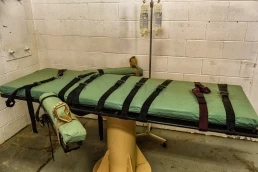
Everything You’ve Been Told About Lethal Injection Is a Lie
Take Action Now Death by drugs is brutal—and designed for political optics. Christa Pike’s failed execution pulled back the curtain.By Arianna…