A population that cannot afford to stay in one place cannot build civic associations, and a society without civic associations cannot resist concentrated power.
By Evelyn Quartz, Jacobin
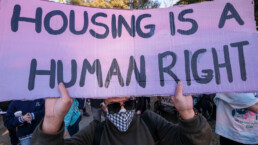
Before Americans imagined a democracy 250 years ago, they demanded land — the material independence that made civic life and resistance to tyranny possible.
Thomas Jefferson believed that landownership was the foundation of a healthy republic, empowering citizens to act independently rather than rely on the will of a landlord or employer. For Jefferson, independence was not only an economic condition but a moral one. (Albeit only for white, male Europeans, and not North America’s indigenous peoples, from whom they forcibly took the land.)
He wrote, “Cultivators of the earth are the most valuable citizens. They are the most vigorous, the most independent, the most virtuous, and they are tied to their country, and wedded to its liberty and interests, by the most lasting bonds.”
French philosopher Alexis de Tocqueville, among the young nation’s first chroniclers, came to believe that Americans’ propensity to form civic associations created the lasting bonds that were the country’s real defense against tyranny. Without communal ties and shared responsibilities, Tocqueville feared individuals would fall prey to paternalistic “soft despotism,” in which top-down state administration replaces self-government.
In such an arrangement, he wrote, “Each [citizen], living apart, is as a stranger to the fate of all the rest . . . he exists but in himself and for himself alone; and if his kindred still remain to him, he may be said at any rate to have lost his country.”
Recent Posts

“Abolish ICE”: Protests Erupt in NYC After ICE Agents Shoot Father With 5-Year-Old Son in Car
Take Action Now “Candidates should seek support from the AI industry at their own peril.”By Amy Goodman, Darializa Avila Chevalier, and Carmen De…

Voters in Key States See AI Campaign Cash as More Politically Toxic Than AIPAC: Poll
Take Action Now “Candidates should seek support from the AI industry at their own peril.”By Jake Johnson, Common Dreams Polling data released…

Everything You’ve Been Told About Lethal Injection Is a Lie
Take Action Now Death by drugs is brutal—and designed for political optics. Christa Pike’s failed execution pulled back the curtain.By Arianna…

British Support For Israel Is Shattering
Take Action Now There is not a single member of the Foreign and Commonwealth Office who believes that Israel, under any leadership, would allow a…