
Sanctions are killing hundreds of thousands around the world, annually. It’s time to rethink their use.
By Mark Weisbrot, CEPR
Broad economic sanctions, most of which are imposed by the U.S. government, kill hundreds of thousands of innocent people each year — disproportionately children. This week the Lancet Global Health journal published an article that estimated that number at about 564,000 annually over a decade. This is comparable to the annual deaths around the world from armed conflict.
Sanctions are becoming the preferred weapon of the United States and some allies — not because they are less destructive than military action, but more likely because the toll is less visible. They can devastate food systems and hospitals and silently kill people without the gruesome videos of body parts in tent camps and cafes bombed from the air. They offer policymakers something that can deliver the deadly impact of war, even against civilians, without the political cost.
The above estimate of 564,000 annual deaths from sanctions is based on an analysis of data from 152 countries over 10 years. The study was by economists Francisco Rodríguez, Silvio Rendón and myself.
It’s a horrifying finding, but not surprising to economists, statisticians and other researchers who have investigated these impacts of economic sanctions. These are measures that target the entire economy, or a part of it that most of the rest of the economy depends on, such as the financial sector or a predominant export, for example in oil-exporting economies.
The sanctions can block access to essential imports such as medicine and food and the necessary infrastructure and spare parts to maintain drinkable water, including electrical systems.
Damage to the economy can sometimes be even more deadly than just the blocking of critical, life-sustaining imports. Venezuela is an example of a country that suffered all of these impacts, and the case is far more well-documented than for most of the now 25% of countries under sanctions (up from 8% in the 1960s). In Venezuela, the first year of sanctions under the first Trump administration took tens of thousands of lives. Then things got even worse, as the U.S. cut off the country from the international financial system and oil exports, froze billions of dollars of assets and imposed “secondary sanctions” on countries that tried to do business with Venezuela.
Venezuela experienced the worst depression, without a war, in world history. This was from 2012 to 2020, with the economy contracting by 71% — more than three times the severity of the Great Depression in the U.S. in the 1930s. Most of this was found to be the result of the sanctions.
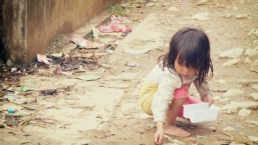
Our study found that a majority of people who died as a result of sanctions in all countries were children under 5. This atrocity is consistent with prior research. Medical studies have found that children in this age group become much more susceptible to death from childhood diseases such as diarrhea, pneumonia and measles when they become malnourished.
Recent Posts
AI Doesn’t Need ‘Superintelligence’ or Evil Intent to Start a Nuclear War
Take Action Now Neither extraordinary machine intelligence nor malicious intent is required for catastrophe to result.By Paul Slovic and Herbert…

30 Months After Uproar Over Jonathan Glazer’s Oscar Speech, What Do His Pro-Israel Denouncers Say Now?
Take Action Now Given all that has happened, I recently contacted some signers of the open letter to ask whether they still fully believe in its…

Midterms Have Revived Universal Healthcare Debate. These States Are Ahead of Everyone.
Take Action Now States have often served as laboratories to test health policies later implemented nationally.By Markian Hawryluk, KFF Health……
Nobel Peace Prize Turns Toward Peace in 2026
Take Action Now To have finally acknowledged someone whose work in any way addressed the horrors of Zionism is an encouraging sign from the Nobel…