
Israel is the main destabilizing force in the Middle East, and its attacks on Iran are being made possible by U.S. support. We bear special responsibility to work to end the bombing.
By Phyllis Bennis and Khury Petersen-Smith, In These Times
Israel’s attack on Iran last week has opened a stark danger — a predictable pattern of escalation ushering in a new phase of the long-standing crises roiling the Middle East region. Certainly Israel has a long history of attacking Iran — including bombing raids; assassinations of political and military leaders as well as nuclear scientists; cyberattacks; assaults on Iranian allies in Syria, Iraq, Lebanon, Yemen, and beyond — and Iran has on occasion struck back. But while it is too soon to know exactly how this latest assault will fully play out, it now holds the prospect of full-scale war between the two strongest military forces in the region, one of them backed by the strongest military power in the world.
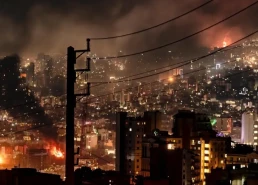
The specific role of the United States in the first hours and days of Israel’s war against Iran remains uncertain; we don’t yet know if U.S. forces were directly involved, and whether or how much the Israelis relied on U.S. intelligence or other immediate assistance in carrying out the assaults on Tehran and other cities across Iran. What we do know is that Israel has always been able to count on continuing U.S. backing — economic, political, diplomatic as well as military — whether or not any particular White House administration supported or disagreed with any particular military attack, and whether or not that support involved direct U.S. military participation.
Beyond that, we can examine what we know about Israel’s (still-underway) attack on Iran, what we know about U.S.-Israeli relations and what may lie ahead.
What we know about Israel’s attack on Iran
On Thursday night, June 12, Israel attacked nuclear facilities and other targets across Iran. It attacked Iran’s nuclear facility at Natanz, but did not go after the deeply-buried and well-protected Fordow fuel enrichment plant until the next day. The United Nations’ nuclear watchdog agency, the International Atomic Energy Agency, confirmed that conditions at Natanz were safe, with no evidence of radiation leakage. The impact of the attack on Fordow is not yet clear.
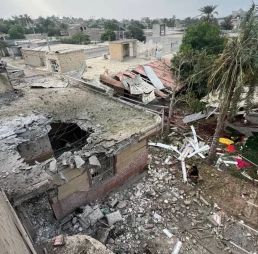
While a full report of casualties — military, civilian, scientific, children and more — is not yet available, we know there were explosions across Tehran and in other Iranian cities. The Israeli strikes killed at least six nuclear scientists, unknown numbers of ordinary civilians including children, and important military leaders, including the chief of staff of Iran’s army and Ali Shakhani, who served as the main liaison between Iran’s top leader, Ali Khamenei, and the diplomatic team meeting with U.S. negotiators. Israeli officials bragged of having had agents of the Mossad, Israel’s international intelligence force, on the ground setting drone targets long before the attack began. While Iran’s initial response involved 100 drones that were all reportedly destroyed by Israel’s anti-aircraft systems, subsequent Iranian attacks have caused damage and injuries in Israeli cities, including Tel-Aviv.
Recent Posts
Tyrant Trump Is Lucky in the Cowardice of His Enemies
Take Action Now Democratic leadership’s refusal to pursue impeachment signals to Trump that he has two-plus unchallenged years to ravage the lives…
The Consequence of Lost Voting Rights Will be Massive Acts of State Violence
Take Action Now The death-cult mentality of US fascism has stumbled upon an ingenious epiphany – the tepid commitment of American voters can be…
Democratic Voters Say They Want Change, But the Party Just Elevated More Hawks
Take Action Now Party leaders are ignoring the three-quarters of registered Democrats who oppose providing military aid to Israel.By Stephen…
The U.S. Bombed a Wedding in Iran. It’s Not the First Time
Take Action Now The Iranian Red Crescent Society has asked the International Criminal Court to investigate the U.S. strike, saying that if the…