By Charles Lenchner
Earlier this summer, President Biden put the kibosh on the hotly disputed last phase of the Keystone XL pipeline known as KXL. Thus ended one of the most significant mass climate-related conflicts in the last decade. In the summer of 2011, more than 1200 protestors were arrested in multiple actions, making it, at the time, one of the largest nonviolent civil disobedience protests in memory.
The protest encampments at Standing Rock, five years later, represented another high water mark of climate organizing. This time, the center of gravity shifted from Washington, D.C. to Indigenous lands, from white male environmentalists to Native leaders, from formal to informal leadership. These protests were also often led by women, including Tara Houska, tribal lawyer, founder of Giniw Collective, and a central figure in the current Line 3 actions. Standing Rock also saw the transformation from carefully planned and executed protests, led by NGO leaders, to the wild chaotic energy of thousands of people figuring out what works best by doing it.
These landmark fossil fuel and climate-related efforts represented high water marks for what is clearly a mature movement. The shifts and changes aren’t isolated — they are part and parcel of how the left in the US has figured out how to mount complex organizing projects, even those complicated by remote location, intense surveillance and police violence, and mass encampments with intricate internal politics.
Line 3 Is Escalating Today
The latest pipeline struggle that supporters of the #KXL and #NoDAPL protests should be watching is around Enbridge Inc.’s Line 3. The proposed pipeline route goes through the upper third of Minnesota where it crosses multiple Native American reservations. Local tribes working with climate organizations and allies are positioned in five camps. In June, just as Biden was revoking permits for KXL, opponents of Line 3 embarked on a new phase of the protests with mass civil disobedience and a hallmark tactic of pipeline protests — digging in and calling for reinforcements — on full display.
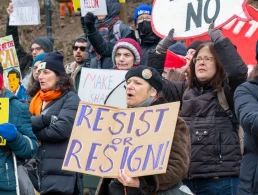
Today, Line 3 opponents are gathering for a major protest in Minneapolis under the banner “Treaties, Not Tar Sands.” With thousands expected to participate, the state’s politicians are nervous enough to shut down the statehouse.
RootsAction staffer Olivia DiNucci has been working with leaders of the resistance camps for months and will be active with the protest today. She’s helping to shine a spotlight on the many issues present in this fight. A key one is the shameful treatment of Native Americans by the United States, including persistent violations of treaty rights which should have given local tribes the right to block this (and other) pipelines. Native leaders and organizations are taking the lead as the frontline community most impacted by future oil spills. But, many others are rushing to support this fight, recognizing it as part of the battle for our survival as a species. Issues of state violence, the militarization of the police, anti-democratic crackdowns on protests, and the incredible power of the fossil fuel lobby in state capitals and Washington, D.C. are represented as well.
This week Progresssive Hub is turning over our site to give extended coverage of the Line 3 fight. It’s not just that this week’s protests are hitting the news cycle. It’s that pipeline protests have been — and are — key to the rise and maturation of the climate justice movement in the United States. If you are learning about this issue today, consider yourself called upon to join the movement.
Recent Posts
New Addition to List of Nuclear Near Catastrophes
February 25, 2026
Take Action Now Debris flew for great distances — many times the distance of 270 meters to a nuclear reactor and nuclear storage facility.By David…
Gavin Newsom’s last budget belies his ‘California for All’ pledge
February 24, 2026
Take Action Now Yet, even as the state is poised to lose billions in federal funding, and millions of Californians are losing access to health care…
Israel and American Hawks are Pushing U.S. to Iran War With Catastrophic Consequences
February 23, 2026
Take Action Now At the World Health Assembly in May, member states may endorse an unprecedented strategy declaring that health is not a cost – but…
A Child’s View of the Attack on Venezuela. And a Peace Flotilla
February 23, 2026
Take Action Now Fabricio said that he and his family went out of their building and saw many people also going outside, running around, and kids…