
Chris Wright turns a real issue into a neat talking point for the destruction of the planet.
By Gabriel Colburn, Foreign Policy in Focus
Chris Wright, who was recently confirmed as the new secretary of energy, has been famous for years as one of the more unapologetic proponents of fossil fuels. In 1992, Wright founded Pinnacle Technologies, an early leader in the hydraulic fracking business, and later made his fortune as the CEO of Liberty Energy, one of the largest oilfield service firms in North America. In 2023, he made headlines for a series of inflammatory statements disputing the science of climate change.
Now Wright has taken a different tack on climate—less outrageous, but no less dangerous. At his Senate confirmation hearing last week, Wright claimed that he didn’t deny the existence of anthropogenic climate change; he only denied that climate change warranted any reductions in fossil fuel production. To make his case, Wright spoke in abstractions about “tradeoffs” and “complicated dialogue.”
Then came the doozy: poor countries like Kenya suffered from sparse access to propane fuel, Wright said, and only fracking could deliver the low prices to make up for those shortfalls.
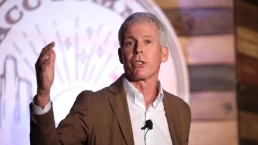
Wright has been quietly developing this specious argument for years: that addressing energy poverty, especially in the global south, requires untrammeled fossil fuel production, no matter the damage to the planet. In Liberty Energy’s 2024 annual report, Bettering Human Lives, Wright laid out his case for hydrocarbon extraction. “Only a billion people today enjoy the full benefits of a highly energized lifestyle,” Wright wrote, while “seven billion striv[e] to achieve the lifestyles of the more fortunate one billion.” Without access to reliable natural gas, “over two billion people still cook their daily meals and heat their homes with traditional fuels, [including] wood, dung, agricultural waste, or charcoal,” putting them at risk of acute respiratory disease from air pollution. The only remedy, according to Wright, is more fossil fuels like gas.
This weaponization of global energy poverty is so insidious because it takes a legitimate issue—inadequate access to reliable energy for billions of people around the world—and turns it into a neat talking point for the destruction of the planet. Energy insecurity is a real challenge for the global south, with over three billion people estimated to suffer from energy poverty of some kind. But so is climate change, which the World Bank projects will push up to 135 million people into poverty by 2030, and which is already fueling extreme weather, conflict, and migration, from Micronesia to the Sahel.
Recent Posts

Midterms Have Revived Universal Healthcare Debate. These States Are Ahead of Everyone.
Take Action Now States have often served as laboratories to test health policies later implemented nationally.By Markian Hawryluk, KFF Health……
Nobel Peace Prize Turns Toward Peace in 2026
Take Action Now To have finally acknowledged someone whose work in any way addressed the horrors of Zionism is an encouraging sign from the Nobel…

64 Groups to Congress: Start Preparing Tough and Effective Oversight Right Now
Take Action Now The question is not whether the public wants accountability, but whether Congress can conduct the meaningful oversight that exposes…

“Abolish ICE”: Protests Erupt in NYC After ICE Agents Shoot Father With 5-Year-Old Son in Car
Take Action Now “Candidates should seek support from the AI industry at their own peril.”By Amy Goodman, Darializa Avila Chevalier, and Carmen De…